Monday, April 4, 2011

Cheese Please and Do you Fondue?

Cheese Please!
Did you know that small dairies in New York State producing value-added products such as cheese increased 38% in the past two years? Let’s hope that these new cheese makers are getting the education, financial and labor support they need to succeed. We are lucky to have two cheese makers in our neighborhood. Linda Smith of Sherman Hill Farmstead in Franklin, NY makes incredible goat milk cheese and last year applied her talents (quite successfully) to making cow cheese. She built an aging room and is producing incredible hard, soft and fresh cheese. On the other side of us in Jefferson, NY, Ron and Corinne Brovetto of Harpersfield Cheese are wizards of cheese production whipping up amazing tilsit with hops, lavender, basil and tomato. New flavors are added each season. I am looking forward to sampling their new flavors although the raw cheese remains my favorite. So with all this great cheese at our fingertips, we are inspired to eat beyond the cheese plate and cook with cheese.

Do you Fondue?
My parents threw fondue parties in the 1960’s. I have fond memories of dipping chewy breads and al dente vegetables into thick bubbling cheese. For dessert, we dunked chunks of pound cake, whole strawberries, and slices of apples and bananas in simmering chocolate. Meat fondue was only served at adult parties because my mother was epileptic about hot oil spitting and splattering within arms' reach. As my parents happily sipped their martinis (from which we would steal the gin-soaked olives in the morning) we spent the evening sword fighting with our fondue forks. En Garde! At Fable’s February Second Saturday Supper we resurrected the fondue and enjoyed dipping chunks of sizzling beef, smoked ham bites, bacon and sausage in bubbling pots of local cheese. In deference to mom, we used broth not oil to cook the meats. For the cheese fondue, Sherman Hill Farmstead’s Heathen Hill cow cheese is a must.

Ready to fondue? So what do you need to fondue? We use the traditional fondue pots with tea candles to keep the pot warm but fondue pots are commonly fueled by electric or sterno. Fondue pots are easy to find at flea markets and yard sales and fondue forks can usually be found in boxes of odds and ends. Here’s a simple cheese fondue recipe for bread. Watch the pot so the cheese does not burn and don’t substitute the wine or kirsh!

Cheese Fondue
Serves 4

1 garlic clove, halved
8 oz Sherman Hill Farmstead Heathen Hill or Gruyere, grated
8 oz Emmenthaler or other Swiss cheese, grated
1 heaping tablespoon cornstarch
10 oz dry white wine (not vermouth)
3 oz kirsch
1 teaspoon nutmeg

One day-old baguette or other crusty bread, cut into inch cubes. If you only have fresh bread, cut it into cubes, spread the cubes on a cookie sheet and put it in a 200-degree oven to dry out.

Rub the inside of the fondue pot with the garlic halves and leave the garlic in the pot. Grate the cheese; put it all in a gallon-sized zipper bag along with the cornstarch. Shake it up so the cornstarch is evenly distributed amongst the cheese. Heat the wine in the fondue pot on the stovetop; add the cheese just before the wine boils. Lower the heat to medium and add the cheese a bit at a time, stirring in a zig-zag motion, not in a circular motion (this apparently keeps the cheese from balling up, a very big fondue faux pas). Once all the cheese is in the pot, keep stirring; the cheese should be bubbling happily along but don't let it get too happy or it will start to burn. Add the kirsch and stir it for another five minutes or so, until it's thick and creamy. Stir in nutmeg.

Light the fondue burner and move the pot from the stove to the fondue stand. Spear a piece of bread with the fondue fork, stick it in the cheese, stir it around, pull it out, eat it. Repeat repeatedly


Ready to graduate to Meat Fondue?
Because of my mother’s fear of splattering hot oil, I most often use this fondue recipe for meat which uses chicken or meat broth, not hot oil.

Meat Fondue
3 cups chicken stock or beef broth (homemade is best)
3/4 cup dry white wine
2 Tbsp garlic (chopped)
2 tsp rosemary (dry or fresh)
2 tsp oregano (dry or fresh)

Saute the garlic in a splash of the stock for about a minute, just to bring out the flavor. Add the white wine and deglaze any garlic on the pan, and let evaporate for about two minutes. Finally, add stock and herbs and bring to a slow boil. The broth is ready to cook your meat! Use these time estimates for your raw meat and veggies:

Beef (steak) 2-3 minutes (Depends how rare you like it).
Chicken 3-5 minutes (Make sure there is no pink in the meat).
Seafood 1-3 minutes
Veggies: Broccoli, zucchini and mushrooms 2-3 minutes, potatoes 5-8 minutes (just dump them in and scoop them out with a slotted spoon).


Fondue Etiquette and Trivia
Fondue comes from Switzerland but it is not an old, traditional Swiss dish. Fondue was invented in the 1950's when the Swiss cheese industry was sluggish. As a marketing ploy to get people to eat more cheese, the cheese industry launched a Fondue campaign. Marketers discovered that a person ate ½ lb cheese or more when they fondued.

Fondue etiquette: Always stir the cheese when you put your forked bread in the pot; it helps keep the mixture smooth. Never eat your cheese directly from your fondue fork then stick it back into the cheese. Double dipping is not nice for the other eaters (unless you're all family or friendly enough that no one cares, or if everyone has had enough wine not to care).
A traditional fondue custom straight from the Swiss Alps: Men who drop their dippers into the fondue must buy the host a bottle of wine or give the next fondue party, while women who make the fondue faux pas must kiss all the men present.

Cheese Trivia
Tune into WIOX 91.3 radio for Watershed Wednesday’s Farm Chatter for the answers!

1. What is the difference between chevre and chevon and chevron?

2. Why was cheese popular in ancient Greece and Rome but butter and fresh milk was not?

3. Americans eat how much per person per week of cheese? ½ lb; 1 lb; ¼ lb?

4. How much of the U.S.’s yearly supply of milk is turned into cheese? ¾, ¼ or ½ ?

5. A law for local? From 1935 to 1937 state law in Wisconsin required restaurants to serve 2/3 ounce of Wisconsin butter and 2/3 ounce of Wisconsin cheese with every meal served. True or False?

6. Why is blue cheese called blue cheese? Eating the cheese cures the blues; mold spores produce blue green veins in the cheese; Monsieur Bleu invented blue cheese.

7. Which nation eats the most cheese? Italy, France or Greece?

8. What is turophilia? Fear of tourists, the habit of shouting “turo” after consuming a lot of wine or the love of cheese?

9. Why is some cheese more yellow than others? Cheese makers add marigold petals to imitate the yellow imparted by beta carotene found in the cow or goat’s pasture diet; the cow or goat’s main diet is pasture; yellow dye is added to the cheese.

10. What is the difference between cheese, processed cheese and cheese food? If you have ever accidentally grabbed American cheese slices with cheese food in very small letters on the label, you know the difference by taste.

Last Saturday Supper of the Season at Fable
The last Saturday Supper of the season at Fable is April 9th. We are celebrating the arrival of the Easter bunny by eating his cousins. Join us for maple sausage stuffed apple; rabbit pot pie with horseradish whipped potatoes, spring greens and baked apple shortbread with pepper cream. Wine suggestions available at Fable by the glass or bottle are Brotherhood 2004 Merlot or Heron Hill Game Bird Red. Fable is open for the season for Saturday weekly dining May 28th. We are going to have some fun this year with guest chefs, innovative cooking methods and unique eating styles. More to come.

New York State Farmstead & Artisan Cheese Makers Guild Annual Meeting
For current, new and interested cheese makers. Hobnob with New York State cheese makers and learn about the regulatory, production and sales challenges. Get the skinny on how fast cheese makers are growing in NYS!

Wednesday April 20th 10 am to 4 pm at Kortright Creek Creamery at Stone & Thistle Farm 1211 Kelso Road East Meredith 13757 607-278-5800. Enjoy pot luck lunch and cheese sampling and presentation by Dave Barbano from Northeast Dairy Research Center at Cornell University on potential legislative changes involving raw milk cheeses and on milk chemistry research. Please bring: Lunch to share and samples of your cheese; questions, ideas and comments for Guild membership and the upcoming year’s calendar; photos or announcements about your farm and products.

For information contact:
Nancy Taber Richards
Finger Lakes Farmstead Cheese Company
5491 Bergen Road
Trumansburg, NY 14886
607-387-3108 nancy@fingerlakes-cheese.com  or the guild’s website: www.nyfarmcheese.org

Monday, February 28, 2011

Get your Goat?


No Kidding – We’re kidding


Kidding season is in full swing. The first kid goats were born in February’s subzero temperatures. Unless we were at the freshening, some of them did not make it. We also lost a few ear tips from the cold. We have 20 females and 20 males on the ground with ten more does to freshen. All of the yet-to-freshen does are yearlings and we need to pay special attention when they are freshening. We breed for milk production not mothering skills and some of the yearlings are downright bad mothers. They freshen and walk away from the kid(s) without cleaning them and getting them on their feet. After such a painful ordeal, they can’t imagine that there is more “work” to do like making sure their kids are on their feet and nursing. So we have to be in the barn to swoop them up, dry them off and bring them inside for warmth and their first bottles. At any time, there is one to ten goats in my kitchen.
There's A Goat in My Kitchen (Again!)

Normally freshening occurs without much intervention/interference from us. But this year we had three difficult deliveries which required pushing the kid back in, rearranging the head and legs and guiding the kid back through the birth canal. There was a breech delivery which required pulling so hard that I was worried that the kid’s legs would disengage from the body. The kids are tagged with colored and numbered ear tags – yellow for the females and green for the males. The numbers are then logged into an Excel spread sheet so we know who is who.


Kids in Orbit - Pan Feeding

The Bottle Rack Feeding Method

We are building a creamery on the farm to bottle our milk and make yogurt and cheese.  The creamery’s equipment is being paid for by a USDA grant but like all monies tied into the government, the project is delayed by funds disbursement.  So as soon as we are inspected we can begin raw goat milk sales but will not be selling goat milk products until summer.  As a result, we decided to keep the males on their moms so they will grow really fast and fetch us good prices for the Easter markets.  The males that are nursing their moms are almost twice as big as the bottlefed males.   The nursed male kids have 24/7 access to the mom milk bar and the females and bummer lambs (lambs without a mom) are bottle fed twice a day.   We milk the does, pasteurize the milk and feed it back to the kids.  Why?  Mostly for prevention from caprine and ovine diseases such as CAE and Johnnes.  We have used different methods over the years for raising kid goats.  We’ve used a lamb bar or suck-it-bucket which is a bucket with ten nipples attached to it.  The warm, pasteurized milk is poured in the bucket; the bucket is hung over the pen and the 12 goats go at it.  The problem with this method is that some goats get more than others; when the fastest sucking goat is done it moves over to the next nipple and bumps the kid out of the way.  The domino bumping continues and one or two kids get very little milk.  The other method is pan feeding; most cow dairies pan feed their calves.  The kids are not efficient at lapping milk like calves and digestion problems become a huge issue. Clots of curded milk are lodged in their rumens and they eventually die.  The third method is the rack.  Individual bottles with nipples attached are inserted into the rack and the rack is hung over the side of the goat pen.  The design of the rack is not perfect.  If you don’t supervise, the domino bumping occurs and the bottles pop out of the top of the rack. But this method is much more efficient than hand bottle feeding, which we are doing now.  We are hand bottling 28 kids and lambs.  When Riley was living with us, he was able to hold two bottles in each hand and one between his legs.  The problem with the bottle acrobatics is that when one the first goat finishes – your hands are occupied and you can’t easily protect the fast sucking intruder from hijacking a bottle in your other hand.  

The kid goats are bottle fed for eight to twelve weeks. The cuteness factor dissolves after a few feedings and everyone on the farm looks forward to the last bottle feeding of the season. The weaning process begins at about eight weeks – the kids are eating hay and pasture and small quantities of grain at this point. We bottle feed only once a day for a week or two and then every other week for a week. It is a great day when we can throw out the nipples, the soda bottles and store the rack in the top of the barn until its use next spring.  

Goats in Horse Barn playing King of Goat Mountain
The kids and bummer lambs are housed in the former horse barn. We have not horses in that barn for five years but I have a feeling that it will forever be called the horse barn. Barrels are placed on their sides for sleeping and cuddling corners and a couple of platforms are in the middle of the pens for the goats to play on. At two to three weeks, the female kid goats are disbudded; their horns are burned off with a disbudding iron. We used to keep the horns on the goats but it is difficult for the milking does to get their heads in the milking stands and we were constantly rescuing horned goats from entanglement in fences and feeders. Also, horned goats have an advantage and their typical goat play (rearing up and bashing heads) is dangerous for a non horned goat. While the horns are great handles for escorting them to and fro, we have had a few accidental piercings of hands of foreheads.
 
Let Me Entertain You - Let me Make you Smile!


The Hay Feeder Rubbed the Hair off our Noses!

Yearling Goats in Horse Barn


Why goat milk versus cow milk? Most people who drink goat milk are not able to drink cow milk because of lactose intolerance. While goat milk has the same percentage of lactose and fat, it is easier to digest because the fat globules do not bind together and are more easily digested and nutrients more efficiently absorbed. Many people believe that goat milk tastes “bucky” or “goaty”. I enjoy dispelling this myth with the Udder Challenge – comparing the taste of goat milk to cow’s milk with adventuresome milk tasters. Over half of the tasters cannot distinguish the cow milk from the goat milk. If goat milk tastes like the smell of a buck or a goat, it is most likely because the milk was improperly handled such as leaving it unrefrigerated for a while.

Recipes for Goat Milk
Raw goat milk is the best. The milk holds the flavor of the grasses, herbs and browse that the goats are eating. The flavors of the seasons are celebrated in the fresh milk. In the spring, the goat milk has a green, tangy taste from new grass and is buttercup yellow from the dandelion flowers. When the mint appears streamside, the milk, even as it is milked out of the udders, wafts of fresh mint. By June and by July the distinct taste of wild thyme flavors the milk. In late summer, the taste of hawthorn berries, wild blackberries and raspberries dominates the milk. By autumn, the milk is deeper flavored and more concentrated with taste traces of leaves, mosses, earth and apples.

My favorite goat milk recipe is Cajeta, a Mexican caramel that is drizzled over ice cream or pound cake or eaten with a spoon right out of the jar.

Cajeta
2 quarts of goat's milk
2 cups sugar
1 large, plump vanilla bean, preferably Mexican, split open (or substitute 1 tablespoon pure Mexican vanilla extract)
1/2 teaspoon baking soda, dissolved in 1 tablespoon water
1.  In a large, heavy pot (not iron), combine the milk, sugar, and vanilla, and place over medium heat. Stir regularly until the milk comes to a simmer and sugar is dissolved. Remove the pot from the heat and add dissolved baking soda; it will bubble up. When the bubbles have subsided, return it to the heat.
2.  Adjust heat so that the mixture is simmering briskly but not boiling. Cook, stirring regularly, until the mixture turns pale golden, about two hours.
3.  The milk should be stirred regularly as it begins to thicken and turns a caramel-brown color. Don't allow the milk to stick to the bottom of the pot. You can drop a few drops into a small glass of water. If a soft ball forms, the cajeta is ready.
4.  If you take the pot off the heat and allow the cajeta to cool, it should be a medium-thick sauce. If it's too thick, add hot water, 1 tablespoon at a time until it is the proper consistency. If it is too thin, return to the heat until it thickens.
5.  When the cajeta is cool, remove the vanilla bean. Strain the cajeta through a fine mesh strainer into a bowl or wide-mouthed jar, then scrape the seeds from the vanilla bean into the cajeta. Refrigerate until ready to use. Cajeta is best served warm.

It is difficult to make goat milk cream as goat milk is naturally homogenized. It requires a separator.  We make a lot of goat milk fudge, ice cream and chevre.  Spring's offerings of chives and dandelions mixed in the chevre is a little slice of heaven.  

What is your favorite recipe with goat milk?


Thursday, February 3, 2011

It's in the Soup and Good Farm and Food Reads

It’s in the Soup


My dad sent me a new cookbook last week - Earthbound Harvest – a collection of stories and recipes from the organic vegetable farm in Carmel, California, The book opens with a story of how the farm grew from a ramshackle road stand to a multinational corporation. The beginning recipe section is a celebration of soup. The first recipe is for Nan’s Tomato Rice Soup made with canned tomato juice, beef short ribs, onions, celery and rice. Simple. Perfect. This chapter, which also includes chicken parmesan soup, shrimp and corn chowder, curried garnet yam soup, pear and fennel soup and butternut, white bean and chard soup, inspired me to begin a journey discovering soup. Not only is soup the perfect meal for fending off the chills of February, it is the ideal way to glorify leftovers and make use of the canned harvest in the cellar pantry. My husband was searching for celery to dice into the egg salad. The celery? It’s in the soup! Cranberries? It’s in the soup! Cinnamon bread? It’s in the soup! Now my family peers first into the stock pot to see if the food for which they are searching is in the soup.

Soup for breakfast? Absolutely. A steaming bowl of broth is perfect. After morning chores, instead of another cup of coffee (so much caffeine), I curl my cold fingers around a bowl of meat broth. The freezer is full of stock so I started canning it. Some people are paranoid about running out of half and half or toilet paper; I worry about running out of stock or broth. So every chicken or turkey or rabbit carcass, every pork or lamb chop or beef bone relives as broth. And every nib of onion, celery, turnip, carrot or leek is thrown into the pot. Good stock is like a strong foundation; it is easy to build something great from good stock. Soup is a diary of what we have eaten during the week. Leftover rice, vegetables, meats, chutneys are thrown together to create soup. Jackson Pollock probably made great soup. Making soup is as creatively satisfying as painting or sculpting but more so because it nourishes us.

Nan’s Tomato Rice Soup
From The Earthbound Book by Myra Goodman

3 lbs beef short ribs on the bone untrimmed
2 large onions, cut in half through the stem end
4 ribs celery including leaves
2 large cans (64 ounces each) tomato juice (from my canned tomatoes)
1 cup long grain white rice
salt and black pepper

1. Combine the short ribs, onions, celery, and tomato juice in a large stockpot. Place the pot over medium high heat, cover and bring to the start of a simmer. Reduce the heat to medium-low and simmer until the meat is so tender that it falls off the bones, about four hours. Then let the soup cool for 30 minutes.

2. While the soup is cooling, combine the rice and 2 cups water in a medium size saucepan, cover, and bring to the start of a boil over high heat. Reduce the heat to low and cook until the water has been absorbed and the rice is tender, about 15 minutes. Remove the lid and let the rice cool.

3. Strain the soup through a colander set over a clean saucepan. Skim off any fat that has risen from the surface and discard it. (Alternately you can refrigerate the soup until is it chilled and then remove the layer of congealed fat that rests on the surface.) When the bones and vegetables are cool enough to handle, remove the meat from the bones and add it to the liquid. Discard or save the bones, onion and celery for stock.

4. Reheat the soup covered over low heat. Season with salt and pepper (Depending on the tomato juice you use, you may not have to add salt.) Divide the rice among the soup bowls, ladle in the soup and serve hot.

Other great soup recipes can be found in my favorite recipe books The Victory Garden Cookbook by Marion Morash and Nourishing Traditions by Sally Fallon.

Good Farm and Food Reads


I want to read as much as I can before the kid goats are born and we are milking twice a day and bottlefeeding 50 goats two or three times a day. My favorite books about food, cooking or farming are below and were found at my favorite used book stores The Bibliobarn in South Kortright and the Rose and Laurel Bookshop in Oneonta :

Tender to the Bone from Ruth Reichl. I laughed the hardest about her accounts of her mother’s poisonous cooking (really – she poisoned a wedding party with bad fish.)

Comfort me with Apples by Ruth Reichl. It’s not as good as Tender but still insightful about her days as editor in chief of Gourmet Magazine.

In Good Hands – The Keeping of a Family Farm by Charles Fish. A great history of a Vermont Farm

First Person Rural – Essays of a Sometimes Farmer by Noel Perrin. It brought back memories of our early farm escapades

Of Sheep and Men by R.B Robertson A great read about sheep, herding and dogs in the 1950s in Scotland.

A three book series: Moving UpCountry, Living UpCountry and Growing UpCountry – Raising a Family and Flock in a Rural Place by Don Mitchell. Packed with delightful adventures about families, flocks and farming.

I would love to hear your food, farming, cooking “good read” suggestions!


Monday, January 3, 2011

January Jewels of Thought


We slaughtered a pig before Christmas for an adventuresome colleague.  He made hams in brine, and bacon and blood sausage (we saved the pig's blood).  He boned and rolled the loins with the cracklin' tied on and made tenderloins as Wiener Schnitzel.  He shared the finished results in the above photos. The other photos describe the kill, scalding and scraping the skin and cutting the pig into primals.   The prize was the head, carefully wrapped.  I can't wait to see what Jason does with the ears, jowls, snout and tongue.

Snow Storm and Border Collies Cavorting


During Christmas week, a couple of feet of snow were dumped on our valley so we had a white white Christmas.  Since our only travel was to the barns and pastures and back to the house, it was a joy to be snowed in.
New Year Food Resolutions

We are fortunate to have farm fresh eggs, milk and grass-fed meat and a cellar with canning cupboards stacked high with green beans, jams, jellies, coleslaw, applesauce, tomatoes, tomato paste and sauces and salsas. The root cellar is brimming with parsnips, squashes, potatoes and onions and the leeks are still in the garden. I pour boiling water over the leeks buried in the snow to unearth them.   My New Year Food Resolutions for 2011 are:

• Host a pantry swap in April so ten years from now there will not be ten-year old pickled cauliflower in my canning cupboard
• Buy a milking cow so I don’t have to buy milk from the store or bribe my family to drink goat milk
• Plant more exotic greens and edible flowers in the gardens
• Build a smoker for meats
• Make bread more than once a week
• Cook more in the fireplace using methods such as string turned roasting
• Eat more wild and foraged food
• Try to buy less than 10% of the food we consume from the grocery store.

When I shared these resolutions with my friends they asked me to come up with resolutions for people who do not have access 24/7 to farm fresh, organic food. The points below were shared at the Farm Catskills Annual Meeting in 2009.

1. Stop drinking sodas and other sweetened beverages (like iced teas, energy drinks, etc).  You can lose 25 lbs in a year by replacing one 20 oz soda a day with a no calorie beverage (preferably water). (from Center for Science in the Public Interest)

2. Eat at home instead of eating out.  Children consume almost twice (1.8 times) as many calories when eating food prepared outside the home. And, you’re more likely to be eating locally grown foods, and more of your food dollars will go to a local farmer.

3. Stay away from processed foods; prepare meals from scratch.  Many delicious and nutritious meals can be made very quickly and simply – and you get more nutrition and value from your food dollars.

4. Tell schools to stop selling sodas, junk food, and sports drinks. Over the last two decades, rates of obesity have tripled in children and teens.

5. Eat local, grassfed meat.  An estimated 70% of all antibiotics used in the United States are given to farm animals in feedlot conditions. Grassfed meat is available year-round from local farmers who do not give their animals growth hormones or routine antibiotics.

6 . Buy organic or sustainable food with little or no pesticides. According to the EPA, over 1 billion pounds of pesticides are used each year in the U.S.

7. Support a local farmer; visit your farmer's market, join a CSA, or shop at a locally-owned food retailer.
Buying local foods allows farmers to keep a larger share of each food dollar, AND keeps more of your money circulating in the community. Find local farmers near you at www.purecatskills.com


8. Make a point to know where your food comes from—READ LABELS.
The average meal travels 1,500 miles from the farm to your dinner plate.

Comfort Food and Fable 
Our bodies crave comfort food when the temperature drops and the snow piles high and the winds are ripping and whipping.  We want to eat stews, roasts, soups, puddings and pies and eat next to the fire sipping hot spiced cider and red wine.  So to give you what we crave - Fable's Second Saturday Suppers begin January 8th and are held the second Saturday of every month from January to May at 5 pm. Come sit by the fire and share supper with us and friends and neighbors at the large farm table. Three courses for $30. Great selection of local beer and New York State wine. The menu for January 8 is:

Starter:  winter greens with poached pear vinaigrette
Main:  zinfandel glazed beef short ribs with horseradish mashed potatoes and bacon braised brussels sprouts
Dessert:  old-fashioned baked custard with caramelized sugar sauce

Here are a couple of comfort food dessert - Custard and Bread Pudding:
Old-Fashioned Baked Custard with Caramelized Sugar Sauce
6 eggs
1/2 cup sugar
1/2 tsp. salt
4 cups goat milk or whole cow milk
1 tsp. vanilla extract
1/8 tsp. nutmeg

In a large bowl, beat eggs slightly, add sugar and salt; mix well. Add in milk and stir well. Flavor with vanilla
and nutmeg, mix thoroughly. Butter a 9x9-inch baking dish and pour in custard mixture or butter ramekins. Place dish or ramekins in a shallow pan containing warm water; bake at 325 degrees for 75 minutes or until knife inserted in middle comes out clean. Pour caramelized sugar in each ramekin or serving dish.

Bread Pudding

2 cups granulated sugar
5 large beaten eggs
2 cups milk
2 teaspoons pure vanilla extract
3 cups cubed Italian or French bread, allow to stale overnight in a bowl
1 cup packed light brown sugar
1/4 cup (1/2 stick) butter, softened
1 cup chopped walnuts

For the sauce:
1 cup granulated sugar
1/2 cup (1 stick) butter, melted
1 egg, beaten
2 teaspoons pure vanilla extract
1/4 cup brandy

Directions
Preheat the oven to 350 degrees F. Grease a 13 by 9 by 2-inch pan. Mix together granulated sugar, eggs, and milk in a bowl; add vanilla. Pour over cubed bread and let sit for 10 minutes.
In another bowl, mix and crumble together brown sugar, butter, and pecans.
Pour bread mixture into prepared pan. Sprinkle brown sugar mixture over the top and bake for 35 to 45 minutes, or until set. Remove from oven.

For the sauce:
Mix together the granulated sugar, butter, egg, and vanilla in a saucepan over medium heat. Stir together until the sugar is melted. Add the brandy, stirring well. Pour over bread pudding. Serve warm or cold.

One of my favorite comfort foods in rice pudding but no one in my household likes it so I don't make it. We had a big New Year's Day bash and Morgan George of Sherman Hill Farmstead brought a rice pudding I remembered from my childhood.  I resisted the temptation to whisk it off the table and hide it in the closet so I did not have to share it.   Chicken in A Pot is my favorite main meal - using a whole chicken in the crock pot and adding homemade chicken stock and the assortment of vegetables are in the root cellar.  And bacon. Bacon marmalade will be available in the farm store in a couple of weeks.
 
The New Oven  - the Fireplace

We saw this method of string turned roasting at the Farmers Museum.  Here is our version of Roasting Chicken in the Fireplace usingthe String Turned Roast Method.


Monday, November 29, 2010

Let's Eat Pie and Pigs

The turkeys, ducks, and chickens have been processed for the winter.  The farm is quiet except for the pigs fighting over the pumpkins.  Thanksgiving has come and gone but left us with a few extra rolls around the waist from eating too much pie.  But really, except for the added calories, how can anyone eat too much pie?  Hungry? Eat Pie. Depressed? Eat Pie. Bored? Eat Pie. Stressed? Eat Pie. Angry? Eat Pie. Ecstactic? Eat Pie. Lonely? Eat Pie.  Feeling Svelt and Beautiful? Eat Two Pies.

WIOX Radio in Roxbury's Farm Chatter features me and Tara Collins the first Wednesday of every month at 1 pm. On December 1 we will be chatting about pigs and pie and local and seasonal holiday gift ideas.

Farmer Tom Warren will be the guest this week to talk about how pigs get to be pork on a platter. He will chat about raising pigs and feeding pigs alternative crops such as pumpkins. He spends way too much time watching the pigs chasing pumpkins in the fields.  You can imagine what a riot it is watch big fat pigs frolicking after giant orange marbles rolling about the field.

I will talk about Colonial Minced Meat Pie.  This is a pie filling recipe from an old colonial Willambsburg recipe book that I used in my Perfectly Pie Gift baskets.  The gift basket included filling for minced meat pie, cherry pie, apple and cranberry pie, ready made crusts (just add water) and pie plates and servers.  Two of my favorite relatives are getting this for Christmas.   This recipe is sweet and savory and conjures up memories of fireside cooking and cozy Colonial suppers.

Colonial Minced Meat (real) Pie

1 1/4 pounds of beef round or leftover roast
1/4 pound suet
1 1/2 pounds apples
1 cup raisins or currants
1/2 cup white sugar
1/2 cup brown sugar
1/8 teaspoon pepper
1/2 teaspoon salt
2 teaspoons cinnamon
1 teaspoon clove
2 teaspoons nutmeg
1/4 cup brandy
2 cups cider or apple juice

Double recipe for Pie Crust

1 tablespoon butter (optional)

1. If uncooked meat is used, simmer beef 2-3 hours or until very tender, adding suet for last 1/2 hour of cooking.

2. When cooked, chop beef and suet very fine, into about 1/4-inch pieces. 3. Pare, core, and chop apples to make 3 cups. 4. Mix beef, suet, apples, raisins or currants, white and brown sugars, spices, brandy and cider or apple juice.

5. Prepare pie crust.

6. Line pie plates with pastry, fill each with half of meat mixture. Cover with top crusts, seal edges, slit holes on top for steam to escape. If desired, spread a thick layer of butter on pastry for flaky upper crust.

7. Bake 3/4 hour in 400°-425° oven.

Yield: Two 9-inch pies

These pies are available from Fable's Kitchen in our farm store and the Callicoon Farmer's Market on Sundays.

Tuesday, November 2, 2010

Talking Turkey

Going Going Gone
The calendar page flipped to November and just as we predicted, turkey reservations came barreling in!  The sad news is that we were sold out of turkeys by October 30th and the spare turkeys we saved for us were eaten by predators on November 1.   Coyotes came down off the ridge and picked off one turkey one night and three the next. Flora, our livestock guardian dog was unable to deter them. Last night we put up an electrified corral and herded the turkeys into it at dusk. We moved the night roosts into the pen. We added one more LGD to the pasture.  The racket last night was horrific - howling, barking, whining and yipping.  At daybreak the turkeys were unscathed and happy to be released into the pasture for a day of roaming, scratching, pecking, grazing and roosting. 


Talking Turkey and Food on WIOX
At 1 pm on Wednesday November 3rd, Tara Collins and I will be talking turkey, Thanksgiving, recipes, local food, stuffing.  I will test Tara on her turkey facts and quiz her on facts such as: What is the name of the skin that hangs from a turkeys neck? Wattle, snark, garble, swag?  Tune in tomorrow for the answer to this quiz question and to test your turkey knowledge.  Did you know that before the 20th century, pork ribs were the most common food consumed at Thanksgiving because most pigs were harvested in November? So the theme of next month's Farm Chatter on Wednesday, December 1 is Everything Piggery. 

The centerpiece of Thanksgiving is the turkey but the centerpiece of the turkey is the stuffing.  A few years ago there was a nationwide alert that stuffing should not be cooked inside the turkey because it may not reach a temperature high enough for safe consumption. Phooey. I have been stuffing stuffed in a bird for decades and am not going to sacrifice the yummy turkey juices mixed into the stuffing because of a food safety alert.   My favorite stuffing recipes are:

Pumpkin Stuffing (Make chili and cornbread a few days before Thanksgiving so you have stale cornbread for this recipe.)

Adapted from recipe of Dean Fearing, Mansion at Turtle Creek, Dallas, TX
6 servings
1 cup diced pumpkin (from 1 whole small pumpkin)
3 tablespoons butter
1 1/2 cups diced sweet onions
1 1/2 cups diced celery
1/4 cup finely chopped fresh thyme leaves
1/4 cup finely chopped sage leaves
Salt and cracked black pepper
2 1/2 cups stale cornbread
1 egg, beaten
1/4 cup chicken stock
Parsley sprigs, for garnish

Preheat the oven to 425 degrees F.  Cut pumpkin in half, and then cut each half into several pieces. Place the pumpkin on a baking sheet and roast until tender, about 30 minutes. Let cool, peel away skin, and dice. Lower oven temperature to 350 degrees F.  In a large skillet, melt 2 tablespoons butter over medium heat. Add onion, celery, thyme, and sage, and saute for 5 minutes or until tender. Season, to taste, with salt and cracked black pepper.  Meanwhile, crumble the stale cornbread into a large bowl. Add sauteed vegetables to the corn bread crumbs. Stir in remaining 1 tablespoon butter, beaten egg, and roasted pumpkin and mix well. Then add the chicken stock and mix well.   Transfer stuffing into a medium-sized casserole dish. Bake for 45 minutes. To serve, cut stuffing into squares and garnish with a couple sprigs of parsley

Sausage Stuffing with Fennel and Roasted Squash
The richness of the sausage is a great match for bright, fresh fennel and sweet squash.
8 to 10 servings
Ingredients
Nonstick vegetable oil spray
4 cups 1/2- to 3/4-inch cubes peeled seeded butternut squash (from one 1 3/4-pound squash)
1/2 cup (1 stick) unsalted butter
3 cups chopped onions (about 1 pound)
2 cups chopped celery (4 to 5 stalks)
1 1/2 cups coarsely chopped fresh fennel bulb (about 1 medium)
1 pound pork sausage
1/4 cup chopped fresh Italian parsley
2 tablespoons chopped fresh sage
2 tablespoons chopped fresh marjoram
12 cups (generous) 1-inch cubes day-old pain rustique or ciabatta bread with crust (about 1 1/4 pounds)
2 large eggs
1 1/2 teaspoons fine sea salt
1 teaspoon coarsely ground black pepper
1 cup (or more) low-salt chicken broth

Preheat oven to 350°F. Spray rimmed baking sheet with nonstick spray. Scatter squash on sheet in single layer; sprinkle lightly with salt and pepper. Roast squash until tender, stirring occasionally, about 55 minutes. Transfer to large bowl; cool.

Melt butter in heavy large skillet over medium heat. Add onions, celery, and fennel. Sauté 8 minutes. Add sausage. Sauté until vegetables are tender and sausage is cooked through, breaking up sausage with fork, about 10 minutes. Add all herbs; sauté 1 minute longer. Add to bowl with squash. DO AHEAD Can be made 1 day ahead. Cool, cover, and chill.

Preheat oven to 350°F. Divide bread between 2 rimmed baking sheets. Bake until bread is crusty but not hard, reversing sheets after 5 minutes, 10 to 12 minutes total. Transfer to very large bowl and cool.

Butter 13x9x2-inch baking dish. Stir vegetable mixture into bread. Whisk eggs, salt, and pepper in small bowl to blend well; whisk in 1 cup broth. Add egg mixture to stuffing, tossing to combine evenly and adding more broth by 1/4 cupfuls if dry. Transfer stuffing to prepared dish.

Bake stuffing uncovered until cooked through and brown and crusty on top, 50 to 60 minutes. Let stand 10 minutes.

Lastly, Tara will be tasting one of my new butters from Fable's Kitchen new product line of chutneys, butters, pot pies, pates and other goodies.  The butter is great on toast or on toasted cranberry or pumpkin or zucchini bread, a dipping sauce for pretzels, a dollop on cheese, or spread on the bottom of a pie crust for apple or pumpkin pie.

Pumpkin Walnut Butter

Makes 5 cup jars
3 1/2 cups canned pumpkin
1 cup toasted chopped walnuts
1 tablespoon pumpkin pie spice
4 1/2 cups sugar
1 box surejell fruit pectin
1/2 teaspoon margarine or 1/2 teaspoon butter
Measure pumpkin, walnuts and pumpkin pie spice into 6- or 8-quart sauce pan.
Prepare jars; keep lids hot until ready to fill jars.
Measure sugar into separate bowl.
Stir fruit pectin into pumpkin mixture.
Add butter.
Bring mixture to a rolling boil on high heat, stirring constantly.
Quickly stir in sugar.
Return to rolling boil and boil exactly 1 minute, stirring constantly.
Remove from heat.
Skim off any foam with metal spoon.
Ladle quickly into prepared jars, filling to within 1/8 inch of tops.
Wipe jar rims and threads; cover with two-piece lids.
Screw bands tightly; place jars in hot water.
Boil in water bath for 5 minutes for 8-oz jars.

Last Dinner at Fable is Saturday November 13th.  We would love to see you. The menu for the next two weeks is:
November 6, 2010

Amuse:  caramelized apple onion bites
Starter:  sausage stuffed apples
Main:  horseradish crusted beef roast and garlic roasted potatoes
After:  crispy greens with maple cider vinaigrette
Dessert:  maple walnut pie with double whipped cream

November 13, 2010

Amuse:  cheddar dumplings with hot pepper dipping sauce
Starter:  winter kale and bean bruschetta
Main:  roasted and beer brined chicken with malt glaze with rustic herb stuffing
After:  mixed greens with cider pepper vinaigrette
Dessert:  spiced caramel pear tart with ginger cream

Second Saturday Suppers, three-course supper for $30 begins in January.  Game Night (board games, cards, etc) is coming. Look for information in the next blog.

Friday, October 1, 2010

Autumn Underway

Tribute to Peter

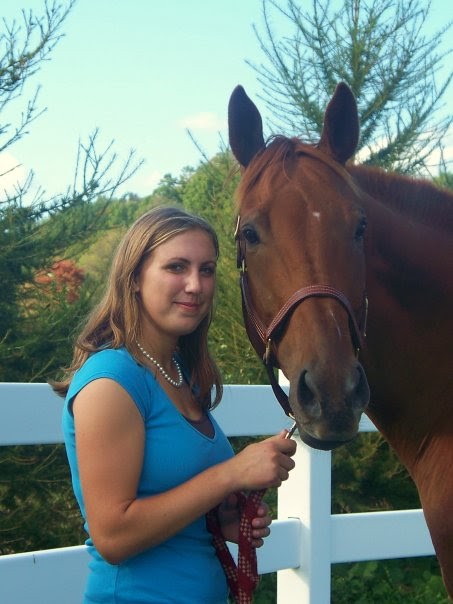
Katey’s horse died a couple of weeks ago. He coliced the day we left for Virginia Beach to visit Tom’s parents and then coliced again mid week. An ultrasound revealed a sizeable tumor on his intestine. We made the decision not to operate and to put him down. Katey bought Peter two years ago. He was a seventeen hand, chestnut, off the track thoroughbred. His racing name was Peter L. Thunder. Katey put her heart and soul and countless hours into training him. A racehorse is a challenge to train. Peter had to unlearn how to be a racehorse. I remember the hours she spent teaching him to stand and not move off her leg when she mounted; how she had to teach him to turn right. I remember the first time she took him to horse show and the announcements via the loud speaker triggered “GO” in his brain and he tried to find the race outside the ring. Peter was never crazy like some thoroughbreds. He was sensible, sound and sensitive. He would not eat hay off the stall floor so we had to put the hay in a hay bag hung from the wall. One night he pulled it down and in the morning, I found him tangled in the hay net. Although he was terrified; he stood still while I untangled the net from around his legs. With my head under his massive body and next to his plate like hooves, he could have seriously hurt me. Peter was a natural jumper. One day we set up jumps in the arena and let him free jump – asking him to take the jumps with a prompt of the whip. He soared high over each jump. We let him cavort about the arena. When we turned our backs to chat, to our surprise, on his own, Peter took the jumps just for fun. Peter and Katey progressed from the arena to the trails and to jumps in two years. When a horse is young, the partnership is a little lopsided. Katey became his “babysitter”. He looked to her for direction, reassurance and confidence. During the past few months the relationship between Peter and Katey started to change; Peter was taking care of Katey – making sure that she was safe and sound while she was on his back. We miss Peter – we miss his beauty, strength, gentleness, desire to love and be loved. We miss his quirks, playful antics and his incredible drive to succeed and be the best partner Katey could have in and out of the arena. Someone told me that losing a horse, because they are our partners, prepares us for the big losses in our lives. And that every horse we ride in our lives, the spirits of the horses we have loved and lost are in our hands, our breath and in our hearts. And the last horse we ride on earth is the embodiment of the trust, courage and strength that we gave and got with every horse we loved throughout our life. That is going to be some ride…..


Range Roost or Turkey Jungle Gym

Turkeys normally roost in trees to stay safe from evening predators. Our hillbilly version of a range roost we built last week provides the turkeys shelter from the rain and a primitive but adequate place to roost during the evenings. The roost is moved with the tractor’s fork lift once a week on to new pasture. When raising livestock, we try to imitate their natural setting as closely as possible while keeping them safe from predators such as dogs, skunks, hawks and owls.

The turkeys are broad breasted whites and broad breasted bronzes and are happy and growing plump on pasture grasses and grain. I read an article on Mother Earth News that when poultry are under stress due to overcrowding, unsanitary conditions, they are twice as likely to carry foodborn bacteria such as Campylobacter in their intestines and surrounding meat which causes serious illness in humans when they eat the poultry. “The bacteria’s ability to affect the chicken is enhanced if the bird is in a stressful situation and the bacteria is also more likely to affect the muscle tissues, “ reported a food safety expert at the National Centre for Zoonosis Research in Liverpool, UK.

We are certain that we are raising happy AND safe turkeys for Thanksgiving. During the 20 years we have been raising turkeys for Thanksgiving, I learned that the flip of the calendar to November 1 triggers a flurry of turkey orders. We sold out last year by the first week in November. If you don’t know your plans for Thanksgiving, then order one for Christmas or the New Year! And who says you can’t have turkey for Easter?

We are offering the work for all or part of your turkey program again this year. How much of your turkey you earn depends on your skill level, the number of hours or days you work, how much you complain about the cold, how entertaining you are during turkey slaughter and a host of other criteria.


Pumpkin Parade
T
he lower field produced a bumper crop of sunflowers and pumpkins. A couple of our bed and breakfast guests spent the morning planting sunflowers in zig zag rows; they will be proud of the results of their farming endeavor. We harvested sugar pumpkins, turban squash, butternut squash and a heritage French pumpkin the day of the frost that killed all the plants. Lucky us. Frosted pumpkins and squash do not keep in the root cellar. While we have been successful in root cellaring potatoes, onions, beets and sunchokes, pumpkins are still a challenge. I have not been able to keep them past Thanksgiving.


Pumpkin Pigs

We fenced the pigs in the pumpkin patch to clean up the leftover pumpkins, squash and sunflowers. They are also doing a great job taking down the burdock. They are having an early Thanksgiving.

Early Autumn


The leaves have turned earlier than usual this year. Most of the tourists visit the Catskill for leaf peeping on Columbus Day weekend but I don’t think there will be many leaves left on the trees, especially if we get  big winds and cold snaps in the next two weeks. The geese started heading south a month ago but their flight activity is increasing. The migratory flight path for the Canada geese must be directly over the farm because hundreds of geese bed down in the corn fields and ponds. Their morning departure is louder than takeoff at a major airport.

How Many Tomatoes Can One Woman Can?

As it turns out, a lot. And pasta sauce, salsa, puree. I am going to keep canning until the frost although the canning cupboards are full. I am secretly hoping for an early frost. I dried a lot of tomatoes and canned dried tomatoes, garlic, basil and olive oil. Layers of summer in a jar. I am also drying apples for the granola I make throughout the winter. A neighbor has arbors of ripe grapes so I am going to try drying grapes. How hard can it be to make raisins? Stay tuned.

The rose hips on the rugosa roses were ripening fast. I made rose hip jelly. You can add apples, lemon or oranges to it. But the basic recipe is as follows:
Rose Hip Jelly
• 8 cups of rose hips
• 6 cups of water
• 1 box of certo
• 1/2 cup lemon juice
• 5 cups of sugar
Boil the rose hips for 10 - 15 min. until soft enough to crush. Crush them and squeeze through cloth, to make juice. For every 4 cups of juice add one box of certo and bring to a boil. Add the 1/2 cup of lemon juice and 5 cups of sugar (1/2 tsp. of marg to prevent foam). Bring to a boil and boil hard for 2 min. Remove from heat and pour into sterilized jars and seal with caps and rings. The jelly has a wonderful flavor and is the consistency of liquid honey.


Smoking is Smokin’

We borrowed a friend’s smoker and have been smoking chickens, sausage, duck, eggplants, almost anything. There are tricks to the smoker such as using apple juice instead of water for the pork. Pairing hardwoods with meats. Tom is the smoker master!


To Swap or Not Swap

My gym gals and other friends with flexible work schedules decided to hold a clothing and jewelry swap on Thursday October 7th at the farm. It is a pot luck lunch at 1:00 followed by the swap. If you have anything you want to swap, bring it. If not, come anyway as you may find something for your friends or family.

I went through two closets. I pulled everything off the hangers and separated it into three piles. Definitely swap, maybe swap and keep. I collect vintage clothes and most of them I have not worn since I was 20. It was very hard to part with the Indian skirt that I wore to the first picnic with my husband or the full brim hat I wore to a friend’s wedding or the evening gown I wore to a  friend’s charity ball in Boston. A skirt with beads and embroidery reminded me that while everyone was wearing t shirts and jeans in college, I was wearing skirts. I loved skirts and still do. Into the swap pile went most of my college days and 20s living in NYC. The pile is monstrous – a bright colored, beaded, embroidered, jingle jangle, satiny, strappy, oh so not me anymore mountain of memories. At least I had the good sense to get rid of my maternity clothes years ago.

Bye to Brunch

The last Sunday farm tour and brunch at Fable is October 10th. We are seriously considering doing another farmer’s market on Sunday next year instead of the farm tour and brunch. The tour and brunch is more an act of love than a source of income. While we love sharing our farm and our food with families, we have to be realistic about the cost/time/profit equation. Do we charge more? Charge for the tour and for the brunch? Make the tour shorter? Serve less food? Reduce labor by using dogs to clean the floor from the carpet of muffin crumbs and eggs deposited by the toddlers. Draw straws with guests and the three short straws do the dishes? Pick and cook your own brunch? Ideas are welcome!


October at Fable

October menus celebrate the harvest with apples, pumpkins, leeks, potatoes and grass fed meats.

October 9, 2010
Amuse - acorn squash, apple and sage puffs
Starter - pumpkin and chestnut soup
Main - bistro steak with shallot merlot sauce
After  - crispy greens with apple vinaigrette
Dessert - apple cup pies with crème frâiche

October 16, 2010
Amuse - buttermilk fried chicken livers with merlot gastrique
Starter - apple potato leek soup
Main - roasted chicken with apple wine sauce
sautéed leeks and root vegetables
After -mixed greens with herb vinaigrette
Dessert - autumn gold pumpkin cake with goat milk caramel

Hope to see you soon.