Tuesday, September 20, 2011

Summer turned into September

Dirty Hands are De Rigueur

I was handing over change to the check-out clerk at the supermarket the other day. She grabbed my outstretched hand and said admiringly, “You must be a farmer”. She then proceeded to tell me how her grandparents had a farm and how she wanted to buy a farm someday.

I was brought up to keep my nails and hands clean; dirty hands meant that you were god forbid, a laborer. Remember how Rhett Butler figured out that the green velvet curtain clad Scarlet O’Hara was lying about her life at Tara? He spotted her dirt creased hands and knew that the soft cheeked belle was actually working with her hands, a sure sign that she needed a cad to rescue her. While it is nice to be admired as a farmer, I could use a good rescuing now and then or perhaps another pair of dirty hands to share the load.


The Flood and What it means to the Unflooded

Areas along the Delaware and Susquehanna rivers suffered serious damage from Hurricane Irene and Lee. National news focused on the devastation in Margarettville, Prattsville, Binghamton and Wilksbarre. Federal and state relief efforts have been slow to assist towns and families struggling to rebuild so private flood relief efforts are emerging locally in the forms of  benefit concerts, events, private parties and auctions. The recent Raise the Roof Flood Relief effort organized by the Hamden Inn, Morgan George of Sherman Farmstead and the Watershed Agricultural Council was a great success raising more than $6,000 for flood stricken farmers. And it was a good reason to see friends and fellow farmers and share food, beer, music and stories, especially after a long, hard summer. The New York Times covered the event. Enough is enough at least for now. The flood relief publicity is killing our businesses. Farmers markets revenue have been down over 40% from last year. Local restaurants are serving only a handful of customers on the weekends and hotels and bed and breakfasts in the region are still unbooked for the upcoming holiday weekend. Why? Tourists and weekend home owners, after seeing news footage of some of our Catskill towns, are assuming that roads are closed, businesses have floated away and the landscape is littered with debris and mud. Most of our region was seriously unaffected by the floods. We lost power for five days and had to dry off our milking goat herd because hand milking was impossible without power. We lost a slew of turkey chicks because they did not survive the first night without heat lamps. But after a week, life returned to normal. Except our businesses.  Farmers are helping farmers by lending a skilled hand for farm work or offering to bring unscathed fall crops to the farmers markets, by loaning hay, helping with milking and lending farm machinery and tools. Instead of organizing a fundraiser why not encourage visitors, tourists, second home owners to return to the Catskills and support our farmers, stores, restaurants, hotels and events. Better yet - go to the farmers market this weekend and support the farmers who are supporting their fellow farmers.


First Frost

The first frost came precariously close to my herb and vegetable gardens. The frost line was one foot from the garden gate. I stopped weeding the garden two weeks ago and it is a disgrace, a wild tangle of weeds taller than my waist. Somewhere in the overgrowth are the potatoes, onions and beets. A good hard frost will kill the weeds and reveal where I planted them. The sun chokes were blown over by the Hurricane winds. So there is a natural hedge row of yellow flowers along the end of the garden. Since there are still ten jars of sun choke relish in the canning cupboards from last year, I may forego digging the tubers this year. I harvested the rugosa rose hips and made rose hip jam and sauce. The seeds inside the shell are coated with sliver like hairs and when digested, irritate the digestive tract. The aborigines called it itchy bottom disease. After reading that, I painstakingly cut and deseeded every rosehip that I harvested from four large rosa rugosas. After many hours of cutting, seeding, boiling, straining, jamming and canning, the harvest yielded four eight ounce jars of sauce. In terms of labor, they are worth an ingot of gold – little jars of rose gold. I will open one jar every month from January to April to help me get through winter.


The Creamery is Coming Up

After the excavation debacle, and then weeks of flooded post holes, we finally got the foundation and the perimiters up. Trusses and roof are next. The equipment is in storage or on hold until the building is up and weatherproofed. The barn raising date will be announced soon.  Our farmer friends Dave and Sonia gave us a gallon of sheep milk. I made a gallon of sheep milk yogurt in the picnic cooler.  The yogurt was thick and creamy and as Sonia described it, like white velvet.  We are fielding calls from people interested in learning how to make yogurt and ice cream.  Once we are up and running, the possibilities are endless. 


Turkey Time

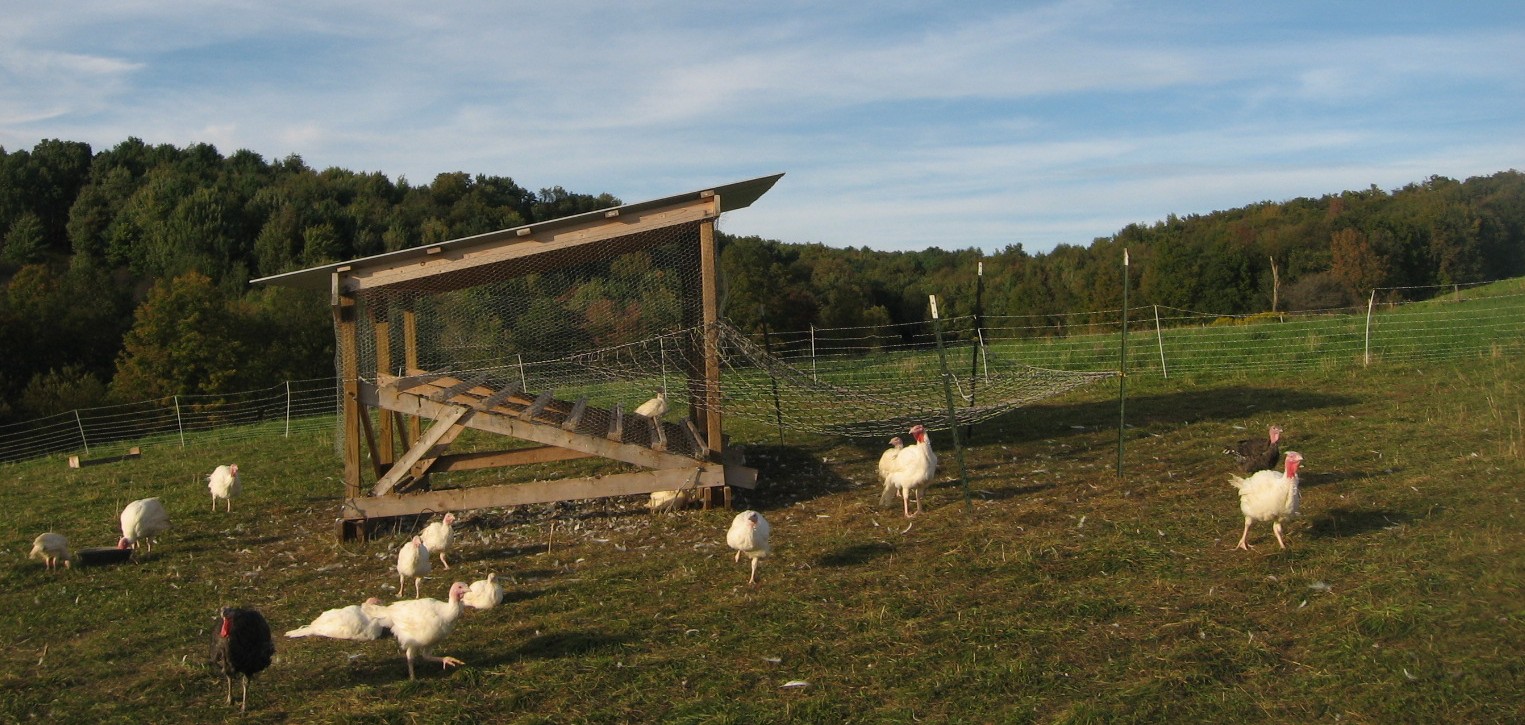
Because we lost most of the turkey chicks for the smaller size turkeys during the hurricane, we have a very limited amount of small size turkeys this year. So if you are looking for fifteen pounds or less, please order now. If the owls don’t stop picking them off, the larger turkeys will be in abundance this year. The owl net we attached to the roost seems to be fending off the owl predators. A reminder - we are usually sold out by the end of October so order early this year. Broad breasted bronzes or broad breasted whites are the breeds – the taste is the same – the bronzes have black pin feather marks on the skin and tend to be smaller.


Fable

The last brunch of the season will be held on Sunday October 11th. Only a couple of more weeks to join us this season for the farm tour and buffet brunch.  Dinners at Fable will continue as long as people continue to make reservations.  Last year, the last dinner of the season was the weekend before Thanksgiving. After Columbus Day, we bring in leather chairs, sofas and rugs and tuck the table up to the fireplace. The menu changes to hearty stews and soups and other seasonal fare that highlight the autumn harvest. The menu for the next two Saturdays is on our website at http://www.stoneandthistlefarm.com/fable.htm


Monday, July 11, 2011

July is Hotter than Hannah

Hotter than Hannah
I walked into Annutto’s the other day and the woman next to me exclaimed, “Wow, it’s hotter than Hannah.” Who is Hannah? How hot is she? I continued my produce shopping with an image of scantily clad, busty Hannah – kind of the Hustler version of Elly May on the Beverly Hillbillies. Hard to banish the image from your brain while you are buying local melons.

Duck Soup

Do you recall the duck disaster last year when 100 ready-to-slaughter ducks escaped through the fence and swam down the stream.  We can only imagine they made it all the way to the Susquehanna River. Never found a single feather. The ducks are on the other side of the road – a good distance from the stream. Ducks are happiest in water so we have a swimming pool for them. They make a mess of the water and it has to be changed daily. We are slaughtering ducks every Thursday along with the chickens. Here is my favorite duck recipe using the raspberries that are ripening faster than we can pick them.

Whole Roasted Duck with Raspberry Port Sauce
1 five lb whole duck
2 teaspoons salt
2 teaspoons paprika
1 teaspoon black pepper
1/2 cup melted butter

Preheat oven to 375 degrees F
Rub salt, pepper, and paprika into the skin of the duck. Place in a roasting pan.
Roast duck in preheated oven for 1 hour. Spoon 1/4 cup melted butter over bird, and continue cooking for 45 more minutes. Spoon remaining 1/4 cup melted butter over duck, and cook for 15 more minutes, or until golden brown.

Raspberry Port Sauce
2 tablespoons unsalted butter
1 shallot, minced
1/4 cup ruby port
1/4 cup dry white wine
2 tablespoons seedless raspberry preserves
1 tablespoon raspberry vinegar
1 tablespoon Dijon mustard
1/2 cup raspberries

Melt 1 tablespoon of the butter in a medium saucepan. Add the shallot and cook over moderate heat, stirring frequently, until softened, about 2 minutes. Add the port and white wine and cook over moderate heat until the sauce is reduced to 2 tablespoons, about 7 minutes. Add the raspberry preserves, vinegar and mustard and whisk over low heat until smooth. Add the raspberries and cook, whisking gently to break up the berries. Whisk in the remaining 1 tablespoon of butter and season with salt and pepper; keep the sauce warm.

Be A Local Hero - Invest in Kortright Creek Creamery

Be a local hero. Invest in Kortright Creek Creamery, and help local dairy farmers succeed. Why are we building a creamery on our farm? We have been milking goats for 15 years. In addition to the sale of raw goat milk on the farm, we have been bottling organic goat milk, making organic yogurt in three seasonal flavors and soft cheese for 8 years. The Big Creamery with which we were working is no longer available. The nearest creamery that can accommodate small producers is over 3 hours away.


We were faced with two options: sell our goat dairy herd and close down the dairy or build a creamery on our farm. Eight years of working at the Big Creamery gave us the expertise on how to bottle milk and produce yogurt and cheese. We learned what to do right and most importantly what not to do. We visited many small creameries to see the operations and inspect the equipment. And most importantly, we asked each dairy producer, “If you could build your creamery over again, what would you do differently?” In collaboration with Farm Catskills, a non-profit agricultural organization, we secured a Rural Business Enterprise Grant from the USDA for the purchase of the equipment for the Creamery. We now have everything we need to bottle milk, make yogurt and cheese and other dairy products. Everything, except the building. The creamery will function as a community creamery for local dairy farmers who want to experiment with creating value-added dairy products and need a facility and a support team to help them add value to their milk so they can survive and succeed. The Farm Catskills USDA grant includes funds for training in production, marketing and distribution.

Invest and enjoy the rewards:
Rewards
$5-$24: a kid goat named after you. You receive a birth certificate and photo.
$25-$49: selection of organic goat milk yogurts (5 6oz cups for $25 or 10 for $49)
$50-$99: selection of organic goat milk and goat milk yogurts
$100: dinner for two at Fable = farm+table or 5 Sunday brunches (excludes, tax, beer and wine and service)
$250: The Farm GetAway - one night stay at Stone & Thistle Farm’s bed & breakfast and dinner for two at Fable= farm+table (excludes tax, beer and wine and service)
$500: The Farm Adventure - Farmer for a Day (see flyer) for up to four persons. One night stay at Stone & Thistle Farm’s bed & breakfast and $150 of meats, cheese, goat milk products or farm products from the farm’s store.
$1,000 +: One day private workshop: your choice of cheese making or yogurt making in the new creamery or sheep herding with expert sheep dog trainer or butchering workshop with rabbits or poultry, plus a farm luncheon plus a one night stay at Stone & Thistle Farm’s bed & breakfast.

Can’t invest cash but have time to help build or materials to donate? Let's barter!
See http://www.stoneandthistlefarm.com/creamery.htm for more details on how to invest.

It’s Rabbit Time
The pasture raised rabbits are ready to slaughter so we are serving braised rabbit smothered in raspberry onion sauce on Saturday July 16th at Fable. I love the taste of rabbit.  Yup I am still trying to use up the raspberries!
Amuse:  blue cheese and basil honey toasts 
Blue Cheese is from Caulkins Creamery, the basil from my herb garden and the honey from Mark Vamos

Starter: smoky bacon and garlic soup
Bacon and garlic from our farm

Main: braised rabbit smothered with raspberry onion sauce
roasted spiked red beets
Rabbit, onions and raspberries from our farm and beets from Lucky Dog Farm

After:  greens with berry vinaigrette dressing
Greens from Lucky Dog Farm

Dessert:  raspberry pavlova
Raspberries and eggs for meringue from our farm

Hope to see you soon.

Sunday, June 5, 2011

Jewels of June

Herding Hens
One of our border collies, Marly, is 12 years old and spends more time in the grass lazing around than working with the sheep or goats.  He was herding the hens for awhile and then flopped down to rest and keep an eye on them.

Gender Hopping
You would think an experienced rabbit raiser would know better. Last year I tried to breed a rabbit for four months. I understand that there is no such thing as a rabbit that cannot be bred but I was convinced that I had the only unbreedable rabbit on the planet. Perhaps she didn’t like guys? Perhaps she was already bred? After the four months of every day “put her in with the buck stint”, we slaughtered her – and lo and behold she was a boy with testicles the size of quarters. So last fall I made extra sure that the boys were boys and the girls were girls. We slaughtered the boys and kept the girls for spring breeding. By April 1st all of the does were bred for May 1 kindling. Except one. Every day for thirty days I put her in with the buck. Nothing. Not that the buck was not interested. He just kept trying and trying and the deed was never done. So I checked her sex. Yup. A female. I found three dead kits in her cage. Could she have been bred when my back was turned? The doe in the adjacent cage was due so I was not sure if the kits were from the doe next door that crawled into the unbred doe cage and died. So for the next thirty days I put her in with the buck. Nothing. I did a little research to see if there was such a thing as a hermaphrodite rabbit. The rabbit expert explained how to palpate for underdeveloped male rabbit anatomy. Bet you don’t read this stuff everyday! So I checked to see if there was an anatomical problem according to the expert instructions. Sure was. She is a boy. Where the penis has been hiding for the past six months who knows. It’s not a normal looking penis but it’s there and explains the unbreedable rabbit. I concluded that my unbreedable doe has an incompletely closed penile shaft characteristic of a condition called pseudohermaphroditism. Something new to learn every day. So she is not a hermaphrodite – she is a he with deformity. Will he taste differently?


Just Because I Bragged
Never brag. About anything. The times I remember shamelessly bragging came back to bite me in the ass. Hard. I was bragging to a group of people at a conference last week that although farm chores are endless, at least I did not have horses to take care of anymore… Since my daughter left last spring for an internship at Welywn Stables in Rhinebeck and took her two thoroughbreds with her, the days of mucking stalls, scraping together enough cash for hay, grain and shavings, putting blankets on, taking blankets off, farrier bills, fencing issues and then finding the time to ride, were over. The VERY next day my daughter called me to tell me that she volunteered me to take care of her older thoroughbred that she had been leasing and that Montecello “Monty” was coming home for a few months. And because he was fully clipped for the winter show season, he could not be thrown out in the pasture. He needed blankets on and off, sheets on and off, groomed regularly and hooves picked. And, “Oh by the way”, she added before she hung up, “he needs a pony to keep him company.” The horse barn hasn’t had a horse in it for a while and the stalls are now occupied by kid goats, yearling goats and piglets. We rushed to move all the kid goats into another barn, remove all the nails, clips and pointy edges from the stall, pack in new bedding with shavings and salvage the rubber horse buckets from the dairy. We set up the round pen because Tom didn’t want the pasture pugged up or the grass would not grow. We worked endlessly for three days to get ready for his arrival. I even put up his old brass name plaque next to his stall door, made him a Welcome Home sign. That was in April. Now the pastures are lush with grass and Monty is out on the fields. He has a stream, trees and cows. As long as he thinks he is a cow there is no need for pony. Thank goodness.


Monty bossing the cows

Monty with the cattle
Montecello
Nicole arrives in time to Slaughter Chickens
Our new intern Nicole arrived two weeks ago. Since her cabin has not been built, she is living in the trailer. The first week was very hot and she worked very hard. We were worried that the combination of heat, our crazy family and slaughtering chickens the third day on the job would do her in. She survived it all and has been a great addition to our family and farm. Her main job is taking care of the broiler hens.  What a blessing to have someone ask, “What can I help you with?” Music to my ears. We are looking forward to a fun summer with Nicole.

One day old chicks in brooder
Nicole with ready to slaughter broiler chickens
The Garden
I built the pea fence but did not get the peas into the ground until June 1. “It’s too hot, they won’t grow,” my family chorused. I built the fence therefore they will grow. There are peas breaking through the ground. After all it was 90 degrees three days ago and yesterday we had a frost. They will grow.


Memorial Day – Summer in Full Swing
What a way to start the summer. Memorial Day weekend was packed with three farmers markets, Fable on Saturday night and Fable for brunch on Sunday and Bed & Breakfast guests. Busy is great; but why does it all happen at once?

We enjoyed our Fable guests this weekend. Lots of new people were visiting the area for the holiday. We love meeting new people and discovering their connection to the Catskills and to food and our farm. Guests share their favorite recipes, wines and adventures. The Memorial Day Fable dinner was a mix of wild spring food like dandelions caper butter and Japanese Knotweed and Rhubarb compote. Did you know that nasturtium buds taste like capers too? For dandelion capers – pick the flower bud when it is small and tight. Put in a jar with olive oil and kosher salt. Voila – capers! We are continuing our celebration of spring for the June 11 Fable dinner with the best of spring including smoked trout, spinach and rhubarb.
Amuse:  smoked trout with honeyed horseradish
Starter:  printemps soup
Main:  spring chicken roasted with lemon balm and sage and peas in pods with lemon verbena sauce
After: baby spinach greens with spicy rhubarb dressing
Dessert:  strawberry sundae with rhubarb compote

Here’s the recipe for Printemps soup
Printemps Soup
Servings: 10
1/4 cup butter
1 pound leeks, chopped
1 onion, chopped
2 quarts water or chicken stock
3 large potatoes, chopped
2 large carrots, chopped
1 bunch fresh asparagus, trimmed and cut into 1 inch pieces
4 teaspoons salt
1/2 pound fresh spinach
1 cup heavy cream

1. Melt the butter in a large pot over medium heat. Stir in the leeks and onion, and cook until tender.

2. Pour water into the pot. Mix in potatoes, carrots and asparagus. Season with salt. Bring to a boil, reduce heat, and simmer 30 minutes, until vegetables are tender.

3. Stir spinach and heavy cream into the soup mixture, and continue cooking about 5 minutes before serving.

Hope to see you at the farm or Fable soon.  In the meantime, enjoy the photo tour of Stone & Thistle Farm. 


View of Farm from Mountain
Irises in hen wagon field
Green Green Pastures

Scottish Highland Crosses


Monday, May 2, 2011

Rabbiting at Stone & Thistle Farm


Rabbit Rerun
Meat rabbits have been part of our farm family for nine years. When my children were young, we asked each of them to pick a “business” on the farm that they could manage independently. They were responsible for the whole project from daily animal care to recording revenue and expenses. We provided them with “seed” money and supervised their project. Katey picked rabbits to raise. We brought her to visit Charlie at Rabbit Tracks farm in Davenport and she chose two meat breeds: a New Zealand buck and three California Red does. Charlie showed her how to keep records for breeding, kindling and general care. We bought Raising Rabbits the Modern Way by Bob Bennett. Katey and Tom built rabbit hutches and bought feeders and water bottles.

Katey nine years old with her first breeding doe
Since Katey left home to be a working student at Welwyn Stable in Rhinebeck and abandoned her rabbits to lavish her love on horses, I have taken over her rabbit business.  The first thing I did was cull (slaughter – no waste; we ate them) any of the does (females) that were producing less than four kits (baby rabbits) per kindling (birth).  I kept young does out of two litters and bred them to the older buck. After several unsuccessful breedings and small litters of one, even two kits, I realized that the buck was too old.  In November, I culled the old buck (male) and bought a young, just old enough to breed buck.   Shane named him Bernard.

Winter is tough on rabbits so we provide the breeding does with cages in the barn and pack them tight with hay for warmth.  We wait until spring to breed them because the kits won’t survive in the sub-zero temperatures. Now that spring has arrived, it’s kindling time again! Using the young buck Bernard, I bred the does in March.  What they say about rabbits is not necessarily true.  Bernard was not interested in the does. Like Ferdinand the Bull, he was much more interested in smelling the green hay in his hutch.  He cowered in the corner of the hutch and stared at the doe intruder.  The Raising Rabbits manual suggested using younger, inexperienced does with Bernard since the older does may be intimidating and too agressive (so much for the older woman initiation theory.) Putting young does in several times with him would make him comfortable with breeding. And to get him in the "mood" the book suggested I tickle his sides.   I felt ridiculous getting a rabbit in the "mood", but the session worked and he bred the first doe’s head.  It took a few days for Bernard to figure out heads from tails but he finally successfully bred doe #1.  How do I know he was successful?  All bucks are different, but most of them seize and fall over on their side as if dead when the “deed is done.”  The first time my daughter bred a doe she ran off screaming for help believing that her buck was dead.  Thank goodness, to the best of my knowledge, she has not had therapy as a result of that incident.

I marked the due dates on the calendar (30 days from breeding) and a few days before the due dates, place nest boxes in their hutches. The boxes are filled with wood shavings and hay.  A few days before the does are due to kindle, they begin building their nests.  They gather the hay in their mouth and build a deep nest in the box. 

Doe gathering hay for her nest

The doe finishes building the nest with fur that they have pulled out from their chests. Some does begin pulling hair out weeks before their due date and they are practically bald at kindling time. Others pull their hair out a few  hours before they kindle.  I still get excited about opening the hutch in the morning and find the fur nest moving and wriggling.

The Nest box with newborn kits in a nest of fur, hay, shavings 
One day old kit


5 week old kits hopping in and out of their nest box

The doe nurses her kits only once or twice a day. In ten days, the kits open their eyes and in three weeks they are hopping out of the next box.
By six weeks, the doe is rebred and the kits are put in rabbit cages that move on pasture.


The cages are dragged on pasture twice a day. The growing kits have ample room to run and bounce. 

The Rabbit Cage Fleet 
Doe and her 5 week kits in pastured rabbit cage on the farm
The young rabbits or fryers are slaughtered on the farm at around 12 -14 weeks.The slaughter process is very simple and takes five minutes. The skin comes off in one pull. It makes a good muff when scraped, salted and tanned. The head and feet are discarded. Often falconers will use the head and feet for training their prey birds.
Tom slaughtering a rabbit

Rabbit meat is delicious. Older rabbits are made into rabbit stew. Stew can include almost any vegetable. Here is one of my basic rabbit stew recipes.

Rabbit Stew
4-6 Servings
3 - 4 lbs rabbit
6 potatoes, quartered
8 carrots, sliced
1 medium onion, chopped
1 teaspoon salt
1/4 cup beef consomme
3/4 cup beef broth
3/4 teaspoon pepper
1/4 teaspoon basil
2 bay leaves
1/4 teaspoon rosemary
1/4 teaspoon thyme


1 Cut rabbit into pieces. Layer onion, potatoes, and carrots in bottom of a crock pot. 2 Add spices to the pot. 3 Add rabbit, salt, pepper, consommé, and about 3/4 cup beef broth. 4 Cover and cook on low for 8 hours. Thicken gravy as desired. Serve with sweet potato biscuits.


Young rabbits or fryers are sautéed with garlic and butter and fresh chives or parsley. This is my favorite recipe that we serve mid summer at Fable using almost ripe pears from our neighbor’s pear trees.


Braised Rabbit with Pears Recipe
Serves 4
2 young rabbits, each cut into 6 to 8 pieces
salt and freshly ground pepper to taste
1/2 cup all-purpose flour
3 tablespoons olive oil
1 medium onion, finely diced
3 cups dry red wine
1 cup chicken broth
2 tablespoons balsamic vinegar
1 tablespoon brown sugar
2 bay leaves
2 sprigs fresh rosemary
1/2 teaspoon salt
2 firm, slightly not-quite-ripe pears; skin removed, cored and halved
3 tablespoons chilled butter


Directions:
Season rabbit pieces and dust lightly with flour. Heat oil in a large skillet over medium-high heat. Add onion and saute for 3 - 4 minutes. Add rabbit pieces and brown each evenly. Add wine, broth, vinegar, sugar, bay leaves, rosemary and salt. Bring to a boil, then reduce heat to medium-low. Cover and simmer for 30 minutes. Add pears to the pan, cover and simmer for 30 minutes more. Remove rabbit and pears and arrange on plates. Remove bay leaves and rosemary from pan. Whisk in butter until melted and spoon sauce over rabbit.


The Updike
Tom makes a great rabbit linked sausage with rabbit, pork, apple, salt, garlic and spices. We sell it in our farm store and at the farmers markets.


Rabbit Workshops
Tom recently gave a rabbit slaughtering presentation at the Callicoon market to a large group of people who are raising or thinking of raising rabbits for food. We held a rabbit workshop last summer and will repeat it this year if folks are interested. A description of the workshop:


Rabbit to Roaster
Rabbits are caged raised during kindling and transferred to pasture cages at weaning. See the rabbitry and pastured rabbit cages. Learn how to raise rabbits on pasture. Learn how to slaughter rabbits and break down the rabbits into parts used for stewing, braising, sautéing and grilling. A rabbit meat inspired lunch will be served. In Fable, the farm’s restaurant, participants will work together to prepare dinner using all parts of the rabbit (including the liver and kidneys) Dinner will be accompanied by the seasonal dairy and produce raised and harvested on the farm.
You don’t have to be a farmer to raise rabbits for meat. A backyard hutch is easy to make and works well for three to four does. And the slaughter process is so quick and easy that every family should be adding rabbit meat to their diets. The French eat a lot of rabbit and every farmers market in France sells live rabbits which are slaughtered a at the market or at home. We don’t have to be French to eat rabbit. Hop right into rabbit raising or buy rabbit meat at the farmers market Bon Lapintite!

Farmer selling live rabbits at Bayeux Market in Normandy France

Monday, April 4, 2011

Cheese Please and Do you Fondue?

Cheese Please!
Did you know that small dairies in New York State producing value-added products such as cheese increased 38% in the past two years? Let’s hope that these new cheese makers are getting the education, financial and labor support they need to succeed. We are lucky to have two cheese makers in our neighborhood. Linda Smith of Sherman Hill Farmstead in Franklin, NY makes incredible goat milk cheese and last year applied her talents (quite successfully) to making cow cheese. She built an aging room and is producing incredible hard, soft and fresh cheese. On the other side of us in Jefferson, NY, Ron and Corinne Brovetto of Harpersfield Cheese are wizards of cheese production whipping up amazing tilsit with hops, lavender, basil and tomato. New flavors are added each season. I am looking forward to sampling their new flavors although the raw cheese remains my favorite. So with all this great cheese at our fingertips, we are inspired to eat beyond the cheese plate and cook with cheese.

Do you Fondue?
My parents threw fondue parties in the 1960’s. I have fond memories of dipping chewy breads and al dente vegetables into thick bubbling cheese. For dessert, we dunked chunks of pound cake, whole strawberries, and slices of apples and bananas in simmering chocolate. Meat fondue was only served at adult parties because my mother was epileptic about hot oil spitting and splattering within arms' reach. As my parents happily sipped their martinis (from which we would steal the gin-soaked olives in the morning) we spent the evening sword fighting with our fondue forks. En Garde! At Fable’s February Second Saturday Supper we resurrected the fondue and enjoyed dipping chunks of sizzling beef, smoked ham bites, bacon and sausage in bubbling pots of local cheese. In deference to mom, we used broth not oil to cook the meats. For the cheese fondue, Sherman Hill Farmstead’s Heathen Hill cow cheese is a must.

Ready to fondue? So what do you need to fondue? We use the traditional fondue pots with tea candles to keep the pot warm but fondue pots are commonly fueled by electric or sterno. Fondue pots are easy to find at flea markets and yard sales and fondue forks can usually be found in boxes of odds and ends. Here’s a simple cheese fondue recipe for bread. Watch the pot so the cheese does not burn and don’t substitute the wine or kirsh!

Cheese Fondue
Serves 4

1 garlic clove, halved
8 oz Sherman Hill Farmstead Heathen Hill or Gruyere, grated
8 oz Emmenthaler or other Swiss cheese, grated
1 heaping tablespoon cornstarch
10 oz dry white wine (not vermouth)
3 oz kirsch
1 teaspoon nutmeg

One day-old baguette or other crusty bread, cut into inch cubes. If you only have fresh bread, cut it into cubes, spread the cubes on a cookie sheet and put it in a 200-degree oven to dry out.

Rub the inside of the fondue pot with the garlic halves and leave the garlic in the pot. Grate the cheese; put it all in a gallon-sized zipper bag along with the cornstarch. Shake it up so the cornstarch is evenly distributed amongst the cheese. Heat the wine in the fondue pot on the stovetop; add the cheese just before the wine boils. Lower the heat to medium and add the cheese a bit at a time, stirring in a zig-zag motion, not in a circular motion (this apparently keeps the cheese from balling up, a very big fondue faux pas). Once all the cheese is in the pot, keep stirring; the cheese should be bubbling happily along but don't let it get too happy or it will start to burn. Add the kirsch and stir it for another five minutes or so, until it's thick and creamy. Stir in nutmeg.

Light the fondue burner and move the pot from the stove to the fondue stand. Spear a piece of bread with the fondue fork, stick it in the cheese, stir it around, pull it out, eat it. Repeat repeatedly


Ready to graduate to Meat Fondue?
Because of my mother’s fear of splattering hot oil, I most often use this fondue recipe for meat which uses chicken or meat broth, not hot oil.

Meat Fondue
3 cups chicken stock or beef broth (homemade is best)
3/4 cup dry white wine
2 Tbsp garlic (chopped)
2 tsp rosemary (dry or fresh)
2 tsp oregano (dry or fresh)

Saute the garlic in a splash of the stock for about a minute, just to bring out the flavor. Add the white wine and deglaze any garlic on the pan, and let evaporate for about two minutes. Finally, add stock and herbs and bring to a slow boil. The broth is ready to cook your meat! Use these time estimates for your raw meat and veggies:

Beef (steak) 2-3 minutes (Depends how rare you like it).
Chicken 3-5 minutes (Make sure there is no pink in the meat).
Seafood 1-3 minutes
Veggies: Broccoli, zucchini and mushrooms 2-3 minutes, potatoes 5-8 minutes (just dump them in and scoop them out with a slotted spoon).


Fondue Etiquette and Trivia
Fondue comes from Switzerland but it is not an old, traditional Swiss dish. Fondue was invented in the 1950's when the Swiss cheese industry was sluggish. As a marketing ploy to get people to eat more cheese, the cheese industry launched a Fondue campaign. Marketers discovered that a person ate ½ lb cheese or more when they fondued.

Fondue etiquette: Always stir the cheese when you put your forked bread in the pot; it helps keep the mixture smooth. Never eat your cheese directly from your fondue fork then stick it back into the cheese. Double dipping is not nice for the other eaters (unless you're all family or friendly enough that no one cares, or if everyone has had enough wine not to care).
A traditional fondue custom straight from the Swiss Alps: Men who drop their dippers into the fondue must buy the host a bottle of wine or give the next fondue party, while women who make the fondue faux pas must kiss all the men present.

Cheese Trivia
Tune into WIOX 91.3 radio for Watershed Wednesday’s Farm Chatter for the answers!

1. What is the difference between chevre and chevon and chevron?

2. Why was cheese popular in ancient Greece and Rome but butter and fresh milk was not?

3. Americans eat how much per person per week of cheese? ½ lb; 1 lb; ¼ lb?

4. How much of the U.S.’s yearly supply of milk is turned into cheese? ¾, ¼ or ½ ?

5. A law for local? From 1935 to 1937 state law in Wisconsin required restaurants to serve 2/3 ounce of Wisconsin butter and 2/3 ounce of Wisconsin cheese with every meal served. True or False?

6. Why is blue cheese called blue cheese? Eating the cheese cures the blues; mold spores produce blue green veins in the cheese; Monsieur Bleu invented blue cheese.

7. Which nation eats the most cheese? Italy, France or Greece?

8. What is turophilia? Fear of tourists, the habit of shouting “turo” after consuming a lot of wine or the love of cheese?

9. Why is some cheese more yellow than others? Cheese makers add marigold petals to imitate the yellow imparted by beta carotene found in the cow or goat’s pasture diet; the cow or goat’s main diet is pasture; yellow dye is added to the cheese.

10. What is the difference between cheese, processed cheese and cheese food? If you have ever accidentally grabbed American cheese slices with cheese food in very small letters on the label, you know the difference by taste.

Last Saturday Supper of the Season at Fable
The last Saturday Supper of the season at Fable is April 9th. We are celebrating the arrival of the Easter bunny by eating his cousins. Join us for maple sausage stuffed apple; rabbit pot pie with horseradish whipped potatoes, spring greens and baked apple shortbread with pepper cream. Wine suggestions available at Fable by the glass or bottle are Brotherhood 2004 Merlot or Heron Hill Game Bird Red. Fable is open for the season for Saturday weekly dining May 28th. We are going to have some fun this year with guest chefs, innovative cooking methods and unique eating styles. More to come.

New York State Farmstead & Artisan Cheese Makers Guild Annual Meeting
For current, new and interested cheese makers. Hobnob with New York State cheese makers and learn about the regulatory, production and sales challenges. Get the skinny on how fast cheese makers are growing in NYS!

Wednesday April 20th 10 am to 4 pm at Kortright Creek Creamery at Stone & Thistle Farm 1211 Kelso Road East Meredith 13757 607-278-5800. Enjoy pot luck lunch and cheese sampling and presentation by Dave Barbano from Northeast Dairy Research Center at Cornell University on potential legislative changes involving raw milk cheeses and on milk chemistry research. Please bring: Lunch to share and samples of your cheese; questions, ideas and comments for Guild membership and the upcoming year’s calendar; photos or announcements about your farm and products.

For information contact:
Nancy Taber Richards
Finger Lakes Farmstead Cheese Company
5491 Bergen Road
Trumansburg, NY 14886
607-387-3108 nancy@fingerlakes-cheese.com  or the guild’s website: www.nyfarmcheese.org

Monday, February 28, 2011

Get your Goat?


No Kidding – We’re kidding


Kidding season is in full swing. The first kid goats were born in February’s subzero temperatures. Unless we were at the freshening, some of them did not make it. We also lost a few ear tips from the cold. We have 20 females and 20 males on the ground with ten more does to freshen. All of the yet-to-freshen does are yearlings and we need to pay special attention when they are freshening. We breed for milk production not mothering skills and some of the yearlings are downright bad mothers. They freshen and walk away from the kid(s) without cleaning them and getting them on their feet. After such a painful ordeal, they can’t imagine that there is more “work” to do like making sure their kids are on their feet and nursing. So we have to be in the barn to swoop them up, dry them off and bring them inside for warmth and their first bottles. At any time, there is one to ten goats in my kitchen.
There's A Goat in My Kitchen (Again!)

Normally freshening occurs without much intervention/interference from us. But this year we had three difficult deliveries which required pushing the kid back in, rearranging the head and legs and guiding the kid back through the birth canal. There was a breech delivery which required pulling so hard that I was worried that the kid’s legs would disengage from the body. The kids are tagged with colored and numbered ear tags – yellow for the females and green for the males. The numbers are then logged into an Excel spread sheet so we know who is who.


Kids in Orbit - Pan Feeding

The Bottle Rack Feeding Method

We are building a creamery on the farm to bottle our milk and make yogurt and cheese.  The creamery’s equipment is being paid for by a USDA grant but like all monies tied into the government, the project is delayed by funds disbursement.  So as soon as we are inspected we can begin raw goat milk sales but will not be selling goat milk products until summer.  As a result, we decided to keep the males on their moms so they will grow really fast and fetch us good prices for the Easter markets.  The males that are nursing their moms are almost twice as big as the bottlefed males.   The nursed male kids have 24/7 access to the mom milk bar and the females and bummer lambs (lambs without a mom) are bottle fed twice a day.   We milk the does, pasteurize the milk and feed it back to the kids.  Why?  Mostly for prevention from caprine and ovine diseases such as CAE and Johnnes.  We have used different methods over the years for raising kid goats.  We’ve used a lamb bar or suck-it-bucket which is a bucket with ten nipples attached to it.  The warm, pasteurized milk is poured in the bucket; the bucket is hung over the pen and the 12 goats go at it.  The problem with this method is that some goats get more than others; when the fastest sucking goat is done it moves over to the next nipple and bumps the kid out of the way.  The domino bumping continues and one or two kids get very little milk.  The other method is pan feeding; most cow dairies pan feed their calves.  The kids are not efficient at lapping milk like calves and digestion problems become a huge issue. Clots of curded milk are lodged in their rumens and they eventually die.  The third method is the rack.  Individual bottles with nipples attached are inserted into the rack and the rack is hung over the side of the goat pen.  The design of the rack is not perfect.  If you don’t supervise, the domino bumping occurs and the bottles pop out of the top of the rack. But this method is much more efficient than hand bottle feeding, which we are doing now.  We are hand bottling 28 kids and lambs.  When Riley was living with us, he was able to hold two bottles in each hand and one between his legs.  The problem with the bottle acrobatics is that when one the first goat finishes – your hands are occupied and you can’t easily protect the fast sucking intruder from hijacking a bottle in your other hand.  

The kid goats are bottle fed for eight to twelve weeks. The cuteness factor dissolves after a few feedings and everyone on the farm looks forward to the last bottle feeding of the season. The weaning process begins at about eight weeks – the kids are eating hay and pasture and small quantities of grain at this point. We bottle feed only once a day for a week or two and then every other week for a week. It is a great day when we can throw out the nipples, the soda bottles and store the rack in the top of the barn until its use next spring.  

Goats in Horse Barn playing King of Goat Mountain
The kids and bummer lambs are housed in the former horse barn. We have not horses in that barn for five years but I have a feeling that it will forever be called the horse barn. Barrels are placed on their sides for sleeping and cuddling corners and a couple of platforms are in the middle of the pens for the goats to play on. At two to three weeks, the female kid goats are disbudded; their horns are burned off with a disbudding iron. We used to keep the horns on the goats but it is difficult for the milking does to get their heads in the milking stands and we were constantly rescuing horned goats from entanglement in fences and feeders. Also, horned goats have an advantage and their typical goat play (rearing up and bashing heads) is dangerous for a non horned goat. While the horns are great handles for escorting them to and fro, we have had a few accidental piercings of hands of foreheads.
 
Let Me Entertain You - Let me Make you Smile!


The Hay Feeder Rubbed the Hair off our Noses!

Yearling Goats in Horse Barn


Why goat milk versus cow milk? Most people who drink goat milk are not able to drink cow milk because of lactose intolerance. While goat milk has the same percentage of lactose and fat, it is easier to digest because the fat globules do not bind together and are more easily digested and nutrients more efficiently absorbed. Many people believe that goat milk tastes “bucky” or “goaty”. I enjoy dispelling this myth with the Udder Challenge – comparing the taste of goat milk to cow’s milk with adventuresome milk tasters. Over half of the tasters cannot distinguish the cow milk from the goat milk. If goat milk tastes like the smell of a buck or a goat, it is most likely because the milk was improperly handled such as leaving it unrefrigerated for a while.

Recipes for Goat Milk
Raw goat milk is the best. The milk holds the flavor of the grasses, herbs and browse that the goats are eating. The flavors of the seasons are celebrated in the fresh milk. In the spring, the goat milk has a green, tangy taste from new grass and is buttercup yellow from the dandelion flowers. When the mint appears streamside, the milk, even as it is milked out of the udders, wafts of fresh mint. By June and by July the distinct taste of wild thyme flavors the milk. In late summer, the taste of hawthorn berries, wild blackberries and raspberries dominates the milk. By autumn, the milk is deeper flavored and more concentrated with taste traces of leaves, mosses, earth and apples.

My favorite goat milk recipe is Cajeta, a Mexican caramel that is drizzled over ice cream or pound cake or eaten with a spoon right out of the jar.

Cajeta
2 quarts of goat's milk
2 cups sugar
1 large, plump vanilla bean, preferably Mexican, split open (or substitute 1 tablespoon pure Mexican vanilla extract)
1/2 teaspoon baking soda, dissolved in 1 tablespoon water
1.  In a large, heavy pot (not iron), combine the milk, sugar, and vanilla, and place over medium heat. Stir regularly until the milk comes to a simmer and sugar is dissolved. Remove the pot from the heat and add dissolved baking soda; it will bubble up. When the bubbles have subsided, return it to the heat.
2.  Adjust heat so that the mixture is simmering briskly but not boiling. Cook, stirring regularly, until the mixture turns pale golden, about two hours.
3.  The milk should be stirred regularly as it begins to thicken and turns a caramel-brown color. Don't allow the milk to stick to the bottom of the pot. You can drop a few drops into a small glass of water. If a soft ball forms, the cajeta is ready.
4.  If you take the pot off the heat and allow the cajeta to cool, it should be a medium-thick sauce. If it's too thick, add hot water, 1 tablespoon at a time until it is the proper consistency. If it is too thin, return to the heat until it thickens.
5.  When the cajeta is cool, remove the vanilla bean. Strain the cajeta through a fine mesh strainer into a bowl or wide-mouthed jar, then scrape the seeds from the vanilla bean into the cajeta. Refrigerate until ready to use. Cajeta is best served warm.

It is difficult to make goat milk cream as goat milk is naturally homogenized. It requires a separator.  We make a lot of goat milk fudge, ice cream and chevre.  Spring's offerings of chives and dandelions mixed in the chevre is a little slice of heaven.  

What is your favorite recipe with goat milk?


Thursday, February 3, 2011

It's in the Soup and Good Farm and Food Reads

It’s in the Soup


My dad sent me a new cookbook last week - Earthbound Harvest – a collection of stories and recipes from the organic vegetable farm in Carmel, California, The book opens with a story of how the farm grew from a ramshackle road stand to a multinational corporation. The beginning recipe section is a celebration of soup. The first recipe is for Nan’s Tomato Rice Soup made with canned tomato juice, beef short ribs, onions, celery and rice. Simple. Perfect. This chapter, which also includes chicken parmesan soup, shrimp and corn chowder, curried garnet yam soup, pear and fennel soup and butternut, white bean and chard soup, inspired me to begin a journey discovering soup. Not only is soup the perfect meal for fending off the chills of February, it is the ideal way to glorify leftovers and make use of the canned harvest in the cellar pantry. My husband was searching for celery to dice into the egg salad. The celery? It’s in the soup! Cranberries? It’s in the soup! Cinnamon bread? It’s in the soup! Now my family peers first into the stock pot to see if the food for which they are searching is in the soup.

Soup for breakfast? Absolutely. A steaming bowl of broth is perfect. After morning chores, instead of another cup of coffee (so much caffeine), I curl my cold fingers around a bowl of meat broth. The freezer is full of stock so I started canning it. Some people are paranoid about running out of half and half or toilet paper; I worry about running out of stock or broth. So every chicken or turkey or rabbit carcass, every pork or lamb chop or beef bone relives as broth. And every nib of onion, celery, turnip, carrot or leek is thrown into the pot. Good stock is like a strong foundation; it is easy to build something great from good stock. Soup is a diary of what we have eaten during the week. Leftover rice, vegetables, meats, chutneys are thrown together to create soup. Jackson Pollock probably made great soup. Making soup is as creatively satisfying as painting or sculpting but more so because it nourishes us.

Nan’s Tomato Rice Soup
From The Earthbound Book by Myra Goodman

3 lbs beef short ribs on the bone untrimmed
2 large onions, cut in half through the stem end
4 ribs celery including leaves
2 large cans (64 ounces each) tomato juice (from my canned tomatoes)
1 cup long grain white rice
salt and black pepper

1. Combine the short ribs, onions, celery, and tomato juice in a large stockpot. Place the pot over medium high heat, cover and bring to the start of a simmer. Reduce the heat to medium-low and simmer until the meat is so tender that it falls off the bones, about four hours. Then let the soup cool for 30 minutes.

2. While the soup is cooling, combine the rice and 2 cups water in a medium size saucepan, cover, and bring to the start of a boil over high heat. Reduce the heat to low and cook until the water has been absorbed and the rice is tender, about 15 minutes. Remove the lid and let the rice cool.

3. Strain the soup through a colander set over a clean saucepan. Skim off any fat that has risen from the surface and discard it. (Alternately you can refrigerate the soup until is it chilled and then remove the layer of congealed fat that rests on the surface.) When the bones and vegetables are cool enough to handle, remove the meat from the bones and add it to the liquid. Discard or save the bones, onion and celery for stock.

4. Reheat the soup covered over low heat. Season with salt and pepper (Depending on the tomato juice you use, you may not have to add salt.) Divide the rice among the soup bowls, ladle in the soup and serve hot.

Other great soup recipes can be found in my favorite recipe books The Victory Garden Cookbook by Marion Morash and Nourishing Traditions by Sally Fallon.

Good Farm and Food Reads


I want to read as much as I can before the kid goats are born and we are milking twice a day and bottlefeeding 50 goats two or three times a day. My favorite books about food, cooking or farming are below and were found at my favorite used book stores The Bibliobarn in South Kortright and the Rose and Laurel Bookshop in Oneonta :

Tender to the Bone from Ruth Reichl. I laughed the hardest about her accounts of her mother’s poisonous cooking (really – she poisoned a wedding party with bad fish.)

Comfort me with Apples by Ruth Reichl. It’s not as good as Tender but still insightful about her days as editor in chief of Gourmet Magazine.

In Good Hands – The Keeping of a Family Farm by Charles Fish. A great history of a Vermont Farm

First Person Rural – Essays of a Sometimes Farmer by Noel Perrin. It brought back memories of our early farm escapades

Of Sheep and Men by R.B Robertson A great read about sheep, herding and dogs in the 1950s in Scotland.

A three book series: Moving UpCountry, Living UpCountry and Growing UpCountry – Raising a Family and Flock in a Rural Place by Don Mitchell. Packed with delightful adventures about families, flocks and farming.

I would love to hear your food, farming, cooking “good read” suggestions!