Showing posts with label lamb. Show all posts

Tuesday, March 10, 2015

March Melt: Shorn Sheep

Sheep Shearing
Q: How many sheep can a sheep shearer shear when a sheep shearer shears sheep?   A: About 10 sheep per hour solo. 

The sheep were scheduled to be shorn in February but the below zero temps, snow, ice and wind made us put off the task until March.  The sheep are due to lamb in mid March and it's important to have them shorn or at least crutched, so the lambs can find the ewes' udders quickly. With heavy fleece, the lambs suck on wool tags and can die trying to find a nipple.  When the temperatures are moderate in March, especially when the sun is warm, the ewes are warmer without their coats. Their thick wool coats are heavy with dampness and if they are in the barn for a couple of weeks while they are bonding with their lambs, the moisture in their fleece creates an unhealthy environment in the barn.  So off with their wool.  We worked straight through the morning gathering, sorting and shearing sheep and then paused for a shearer's lunch of curried sweet potato soup, fresh bread, salad and mince meat pie.  Ty, the three year old border collie, did a yeoman's job of working the sheep in and out of pens.  The wool was sorted, bagged and stored for wool pool on Labor Day weekend.
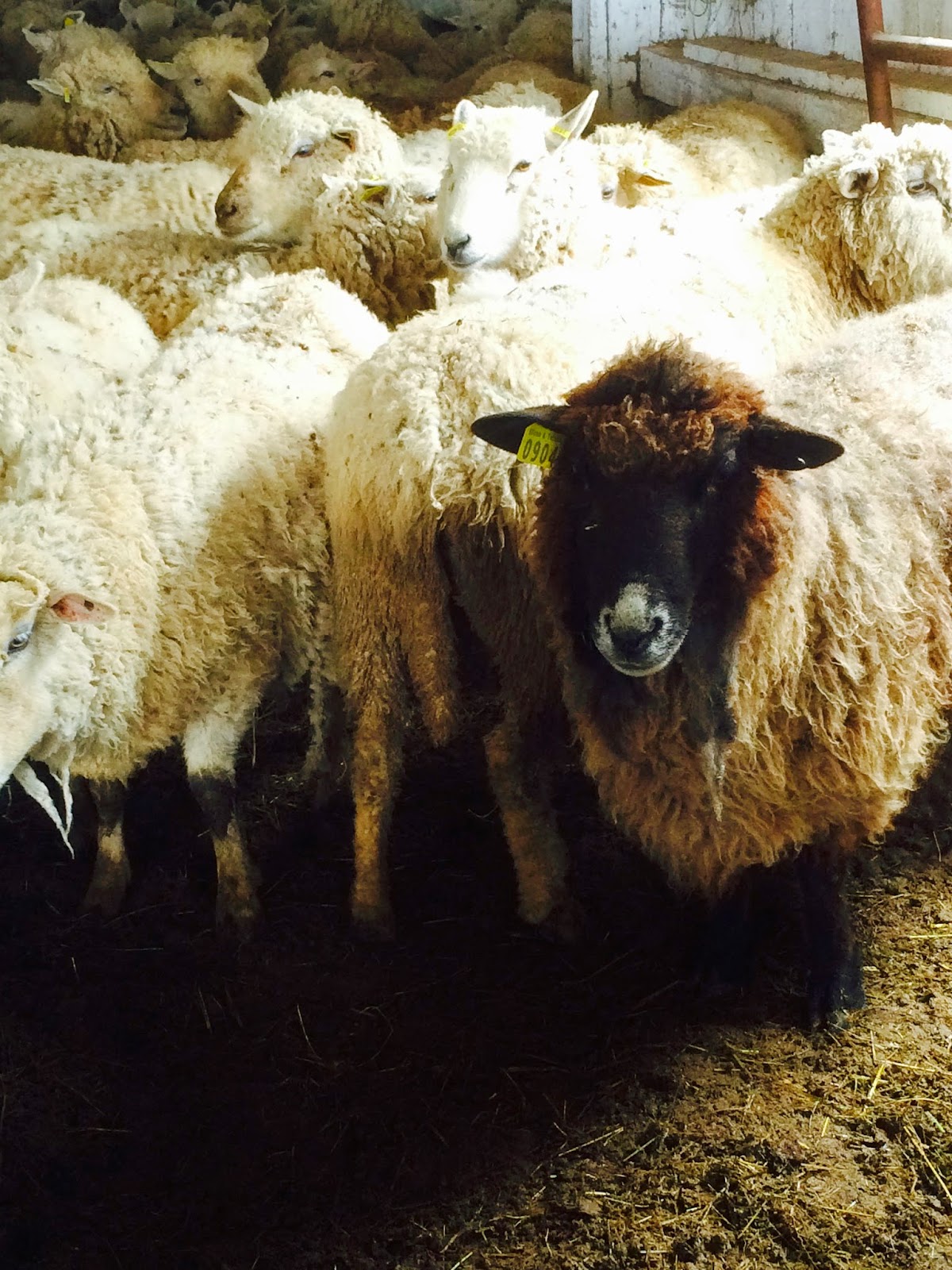
Before Shearing     photo Gerry Gomez Pearlberg

Shearer photo by Gerry Gomez Pearlberg


Tom  photo by Gerry Gomez Pearlbery


Shorn Sheep
The sheep are sporting their new look in the barn yard.  The livestock guardian dogs are keeping an eye on them.
Fat Shorn Sheep
Shorn Sheep with LGDs


For Rent: Rustic Bird House


Wanted Avian Tenant for Rustic Bird House.  Location: Antique maple tree on footpath of farmhouse in East Meredith,New York. Excellent views of dairy barns and pasture. Must like farm animals, dogs and people.  Free to the right tenant.  Single mothers preferred.

We're not Kidding. We ARE Kidding
First ten dairy goats kidded during the coldest weeks of the year in mid-February. If we hadn't whisked them away at birth to dry them and warm them up, they would have perished in 12 below zero temperatures.  The good news is that they all survived; the bad news is that their moms wouldn't take them back so we have bottle fed kid goats in the house. 

What's for Dinner?
All winter we've been attending the Down to Earth Markets' Mamaroneck Farmers Market. In a couple of weeks, we resume the Park Slope and McGolrick Park Farmers Markets in Brooklyn.  As spring tiptoes in, we will offer, in addition to our retail cuts of meats, pates, meat pies, leaf lard, bone broth, soup stock.   Local farmers markets open in May. In the meantime, our farm store is always open.

607 CSA Collaboration
Another great way to buy local food. We are collaborating with Star Route Farm, Berry Brook Farm, Painted Goat Farm and other local farms to bring you fresh, farm food. Through the CSA, we are offering a pastured chicken share,  beef share, meat pie share and lots of a la carte products.  For more information about the 607 CSA   http://www.the607csa.com/
Grass Fed Ground Beef    photo by Gerry Gomez Pearlberg

Tuesday, May 13, 2014

May Oh My


Busy as Bees


Kortright Creek
May is the busiest month of the year. In preparation for the arrival of interns, farm stay guests, Fable guests and the start of farmers markets and the “season”, we are in a, cleaning, repairing, dismantling, planning, organizing and building frenzy. 

The bees emerged from the white cedar tree on the first warm day. After a long, harsh winter we were happy to witness their mad forays from the hive to seek out the sparse pollen offerings of daffodils and dandelions.  Spring is two weeks off schedule. The bees are hungry and the livestock are anxious to be out on pasture with grass. And we want to stop buying and feeding hay. The first sign of spring: the serviceberry tree is blooming. 
Spring in Action

The farm crew has been busy with hammer and nails. The little things: the rotting bird house is rebuilt and remounted on the big maple, the herb garden is now sporting a fence to keep the dogs from peeing on my herbs, the horse barn is festooned with pigeon and owl nets.  The big things:  a greenhouse and mega roost for the new laying hens, brooder boxes for the broiler chicks, portable wooden poultry feeders and watering racks. This year we are doubling egg and chicken production so we needed more cost and time efficient methods for raising them.   Major progress has been made on the Creamery including electricity and insulation installation.
Hen greenhouse with watering stand, roost and electric fence

The roost


Brooder Box

Brooder Boxes in Horse Barn
Tom has also been busy with the chainsaw, axe and wood splitter. We ran out of firewood this year so he decided to get a jump on winter in spring.  When I commented that our neighbor had a huge pile of firewood cut too, he cuttingly remarked that his cord wood pile was much bigger. Hmmm.  Firewood rivalry?
Pile of Wood


Split
New arrivals this month.  The dairy goats are done kidding but the ewes are still popping out lambs, lambs, lambs, including a bottle lamb, Prince, a lovely Merino/Shetland.

New to the dairy herd is a gang of Nubians. I swore off Nubians years ago because they are exceptionally vocal.  These regal ladies are not noisy; the Guinea hens make much more of a racket.
Ears to You!
Grass at Last!

Double Ducks
Broiler chicken chicks and Pekin ducks arrive via the postal service every week.  At 7:50 a.m. the East Meredith postmistress calls to announce the chicks' arrival.  Imagine the sound of 500 chicks chirping in a 12 by 12 foot space.  We do our best to get to the post office before the community arrives to pick up their mail and engage in neighborhood gossip.
Chicks in Hand

Just Foraged Ramps
The heralds of spring are ramps and stinging nettles.  We spend Thursdays and Fridays in the woods digging ramps for the farmers' markets. A thick carpet of ramps grows in the woods near our pastures. Although there are ramps as far as the eye can see, we dig judiciously as to ensure a crop next year. The unsold ramps are transformed into ramp pesto, ramp butter and pickled ramps for sale at the farmers' markets. Pickled ramps make great garnishes for martinis.  The stinging nettles have taken up residence creekside and along the stone walls.   We will be carefully plucking them with tongs and sending them to the markets next week end. Stinging nettles lose their sting when they are ground into pesto or steamed.  We eat nettles like spinach or as a sauce over pasta or in lasagna.
Stinging Nettles


Ramp pesto
10 fresh ramps washed and roots clipped
1/2 cup olive oil
½ cup parmesan cheese
½ cup walnuts
dash of fresh lemon
salt and pepper


Fable=farm+table opens for the season on Saturday May 24th.  This season we are serving dinner every Saturday night through October and brunch every Sunday until Columbus Day. New this year is Simple Fare – three-course dinners for $35 on select Saturdays and event dinners such as May 24: The Picnic; June 24: The Summer Solstice: July 5: The American BBQ; August 30th: The Family Farm. Come at 5:30 and pitch in with farm chores. Family Style Dinner; October 11: The Discovery. Taste Local with a Global Twist. 

We look forward to seeing you at the farm or at the farmers markets.  Next month: Interns and Farmers Markets.
Spring Bouquet

Wednesday, April 2, 2014

Spying on Spring


Stone & Thistle Farm is not participating in spring. We are voyeurs, spying on others' spring. Every article I read from food blogs, culinary posts and magazines, rhapsodizes about the bounty of spring.  Where are all of these contributors from? 


It is April 1 and the ground is frozen solid; the tire tracks from the tractor have created gullies so deep and wide that pitons are needed to traverse them.  There is not one sign of spring, no bobbing robins, crocuses (crocii) snow drops or peepers.  The only sight reminiscent of spring are lambs and kid goats – except they are sporting ice rimmed noses from the frozen water buckets.

The food magazine Saveur's headline is, “What to Cook in April,” and features spring recipes such as asparagus lemon verbena vinaigrette, spiced, braised rhubarb and roasted lamb with rosemary. I wonder, as I look around the frozen brown pastures and dog manured gardens, April where? 
Nourished Kitchen’s feature recipe is spring pizza – made with peas and lemon.  We harvested our peas on June 20th last year.  I planted peas three times last season. The first batch rotted, the second batch dried out and the third batch was picked clean by the guinea hens.  Peas will not have a place in our garden this year. 

Food Network featured a story on buying fresh spring herbs at the Union Square Farmers’ Market in NYC.  The farmers in the article must be charging $20 for a sprig of thyme, to cover the costs of keeping their greenhouses heated. The article included a recipe for cold spring pea soup.  Brrr. The only soup touching my lips is steaming hot and loaded with root vegetables and shredded winter chicken.
 
And several magazines are featuring articles and recipes for Passover and Easter on Spring lamb.  For a leg of lamb to grace your Easter dinner table, it had to have been born in the fall.  And I bet you the lamb at  your table was born in New Zealand where it is spring in our fall.  So banish the myth of spring chicken and lamb.  How about a nice pork roast for Easter dinner?  And brisket for Passover?

A customer from Brooklyn called and asked me to host a private lunch for a group visiting the Catskills next weekend.  They requested local food – with an emphasis on the season – spring. They asked for spring chicken.  It is technically, by the calendar, spring, but the first chick destined to be a roasting chicken, arrived two weeks ago. We will be slaughtering those “spring” chickens in June. Asparagus, she inquired?  There was an asparagus sighting in the grocery store this week but the beautiful green and white bundles hailed from Peru.   Peas, she asked?  Nope.  Dessert she queried – berries on clouds of egg whites.  "Ah, we are getting somewhere," I answered her.  We are overflowing in eggs.  The hens are pushing out ten dozen a day or more.  We agreed on lunch menu of bacon, feta and chevre strata made with fresh goat milk, local cheese and just gathered eggs and bacon from our rascally pigs.  Baby green salad with maple vinaigrette made with greens from a local greenhouse and just tapped maple for the vinaigrette. Pates, cheese and crusty country bread. And for dessert – little pots de crème topped with cherries fetched from our canning cupboards.   

The seasonal guide to food in the Catskills begins with the first sighting of ramps (wild leeks) pushing through the damp leaves in the woodlands around our farm and chives in the herb gardens.
 
Last season's ramps

Over the years, we've harvested ramps in mid April and often continued harvesting throughout May.  Harvesting ramps is cold and muddy work but results in a fiesta of ramp pesto and butter, chive and ramp soup with goat cheese dumplings, ramp and asparagus frittata and ramp custard.  I know it is wishful thinking, but during my walk along the stream today, I was on the lookout for the green tips of ramps or spotted leaves of trout lilies. Nothing resembling green poked through the dense bed of brown leaves.

Saveur, Bon Appetit, Nourished Kitchen, 12 Tomatoes:  I'll check back on your articles and posts in a couple of months when your spring is in sync with my spring.  
 
Smith one of our livestock guardian dogs, enjoying the frozen mud

Friday, March 16, 2012

March Madness (and I am not talking basketball!)

Springing into early Spring

March is usually the most depressing month of the year because we are plagued with all weather - ice, snow, rain, sleet, damp, cold, mud and high winds. This year March came in like a lamb and remains a lamb. We have high hopes that the lamb won’t morph into a lion by the end of the month. Kidding season began two weeks ago. Normally the freezing temperatures create challenges for just born kids. The 50 degree temperatures are good for us and good for the kids. We bred 20 ewes this year so we would have lamb for the farmers markets in May and June. The lambs and kids have commandeered the barn. In early morning the kids race up and down the hillside, the lambs gambol out to the sun. They run, leap, prong and then stop and cry for their moms. Their moms answer back. Each baby finds their mom, take a mid morning bump at the udder and then bellies full, crash. Some of the does are milk bars – they don’t care who nurses from them so some of the kid entrepreneurs run around nursing from every mom before they nap. Their favorite snuggle spots are the door outside the barn in the sun and the alleyway.


Kid Sunning in the Barnyard


Hey I've got Hay

Kid Cache
Too early to Plant the Peas?
The warm weather lures us outside to clean up the pastures, yards and barns. We are discovering right handed gloves, pocket knives, piles of baling twine, haylage wrap, turkey slaughter debris, garbage and whatever the melted snow left behind. I want to start the gardens but the soil is too wet. And I don’t want to uncover all of the perennial herbs because they may need protection if the March Lion visits. I planted peas in June last year and my family told me I was wasting my time. But I had spent so much time building a stick and twine fence that I was determined to use it for peas. And they were right; the peas grew three or four inches and then wilted in the heat. Tom ripped down the stick fence in the fall and is putting up a traditional chicken wire fence with stakes for the peas. Yuk.


Last Year's Pea Fence
The Geography of Convenience

We are planning our summer season which includes applying for urban farmers markets. We attended a Community Markets mandatory farmers market meeting this week in Rhinecliff. The venue had a wonderful view of the Hudson River so when I wasn’t interested in the discussion, I enjoyed watching the tug boats bring barges up and down the river. We currently do one winter market in Mamaroneck on Saturdays. We get up at 4 am and head four hours to Westchester. My favorite part of the trip is the Tappan Zee Bridge and the view of the Hudson River from midbridge. We may be doing a summer market in Westchester and in Brooklyn because sales at our local farmers markets have been disappointing over the past two years. Do we sell at city based markets, make three times as much money but incur three times as much time and expenses doing them? Or do we stick with our local markets and hope they improve? The bottom line is that the opportunities are greater downstate. The downstate markets offer more customers in a higher income bracket and more customers who are willing to allocate a larger percentage of their hard earned money on good food. Over the past two years, many local markets have popped up. The increase in farmers markets is convenient for customers but bad for vendors. There is a limited customer base, and it is not growing. There are 15 farmer's markets in the Delaware County/Otsego county area. Ten years ago there were three. This proliferation has diluted attendance at the larger markets. These markets are just splitting a finite customer base into smaller and smaller pieces. In fact, we could argue that if we sold at two local farmers markets on a Saturday we would be competing against ourselves. We understand the geography of convenience, especially as gas prices sky rocket, but we hope that consumers will drive out of the way to shop at the farmers markets, even if it is not enroute to their children’s soccer game or the dry cleaners. So the challenge for farmers market managers is to secure many vendors selling a wide variety of products or it is not worth the customers trip “out of the way”. Not an easy task. There are many challenges for small farmers who want to sell their products at a market – all having to do with regulations that are hard to understand and expensive – labeling, insurance, compliance, etc. Gone are the days when grandma could sell her peaches and peach jam at a stall at a farmers market.

As more small farmers conquer the ag and markets regulations and make their way into the farmers markets, consumers have more choices. Unlike the grocery store, the farmers market features a farmer behind the table. We don’t have to get all of the information we need from the label; we can have a conversation with the farmer. And the farmer has the responsibility of communicating truthfully and candidly with the customer. For example, our chickens are more expensive than other chickens at the farmers market. Why are our chickens better? How do we communicate that our broiler chickens are better for us and the environment because they roam pastures and woods without slamming the farmer down the aisle who raises his chickens in large indoor sunless houses? Signs, photos and conversations. But ultimately taste. Once the customer eats one of our chickens, he is a loyal customer, even at a higher price. We enjoy doing farmers markets because of the relationships we establish with our customers. When a customer tells us that the pork chops we sold them last week was the best they ever had, the four hour drive seems worth it.

Why No Lamb at Easter?

A week or two before Passover or Easter our farm phone rings incessantly with customers inquiring about lamb for the holiday. We lamb in February and again in May so unless you are interested in eating a new spring, 15 lb lamb and roasting it whole (as many of our Italian and Greek customers do) retail cuts of lamb, such as a leg of lamb, won’t be available for Easter. In the grocery stores, there is plenty of lamb for Easter and Passover because it comes from New Zealand. It is autumn in New Zealand and lamb is plentiful after a six-month growing season on summer pastures. I thought that the New Zealand and Australian Agricultural Council was behind the American tradition of lamb at Easter but discovered that the tradition relates to the first Passover of the Jews. The sacrificial lamb was roasted and eaten, together with unleavened bread and bitter herbs in hopes that the angel of God would pass over their homes and bring no harm. As Hebrews converted to Christianity, they may have brought their traditions with them. The Christians often refer to Jesus as The Lamb of God. The traditions merged.

Smoked ham is also a traditional Easter food. In the early days, meat was slaughtered in the fall. There was no refrigeration, and the fresh pork that wasn't consumed during the winter months before Lent, was cured for spring. The curing process took a long time, and the first hams were ready around the time Easter rolled around. Thus, ham was a natural choice for the celebratory Easter dinner. We have plenty of smoked hams. So pass on the New Zealand lamb and go for a smoked ham this Easter.

Newborn lamb
March Madness

Because it has been so warm, we bred all of the female rabbits this week. I used a new young buck and he seemed to do his job but the proof is in the kits. The gestation period is 30 or so days so if the buck successfully bred them, we will have kits by early April. If the weather is still warm by then we won’t have too much of a problem. One or two of the does are young so we will have to see what kind of moms they are. We culled the doe last year who refused to feed her kits or did not have enough milk. I gave her two chances but she managed to neglect the litters both times. I replaced her with a doe who is very skittish. I pet her everyday when I feed her fresh hay but she remains terrified of me and her surroundings. I make sure that she has lots of hay in her hutch and she spends most of the day buried in it. Of course, the border collies don’t help the situation. Every morning when they are let out of their kennels, they immediately run under the rabbit hutches and stalk the rabbits. The other rabbits ignore their probing noses but this young doe hasn’t figured out that the dogs can’t hurt her through the wire cage. Yelling at the border collies does not work – they are transfixed by the rabbits. They would spend all day watching rabbit TV if we let them. What’s truly madness in March is that the temperature is supposed to top 80 degrees next week!

Iron Rabbit with Tulips

Iron Rabbit

Wednesday, December 28, 2011

Throw Away the Key

We are looking forward to booting 2011 out the door and throwing away the key. I am also asking the powers that be to pretty please bring more good than bad in 2012.


2011
January: Good - Granddaughter Catalina Breeze born. Bad: Monster snowstorm  February: Good - Oldest son Riley home from the army to see his new daughter. Bad - Surprise lambings in bitter cold. Lamb losses and LGD attack March: Good – 75 healthy kid goats born Bad – lose two excellent milkers from difficult freshenings April: Good - Montecello, Kate’s horse from Welwyn, arrives for R&R from a jumping injury. Bad - Cannot find a creamery to bottle our milk and make our yogurt – creamery building delayed because of finances May: Good - Invited to present at the inaugural Slow Money Conference in NYC and new intern arrives. Bad – farmers market sales affected by bad economy June: Good - Kate is accepted for the Equine Management program at Delaware Valley College in Doylestown, PA. Bad – have to borrow money to pay for Kate’s college July: Good – enjoying many guests at the farm stay and Fable is booked solid for Saturday dining and Sunday brunches Bad - The calm before the storm   August: Good – Neighbors. Bad - Hurricane Irene and no electricity for five days. Lost hundreds of turkey poults. September: Good – garden harvest is abundant. Farmers market sales pick up. Bad - Storm flooding causes severe damage along streams and roads. Farmers market sales plummet again. Family crises begin. October: Good – Warm autumn. Still picking and canning tomatoes. Bad - Family crises November: Good – great weather and crew for turkey slaughter Bad – Continued family crises December: Good – Kate home from college for the holidays. 2011 almost over. Bad - family issues escalate

Moonfall over Horse Pasture


Newborn Catalina snoozing

Montecello "Monty" arrives

Easter

The Rabbit Fleet
Slaughtering Easter lambsShane becomes Monty's groom


Letting Broiler Chickens out of Night Cabin
View of Farm from Uppper Pasture

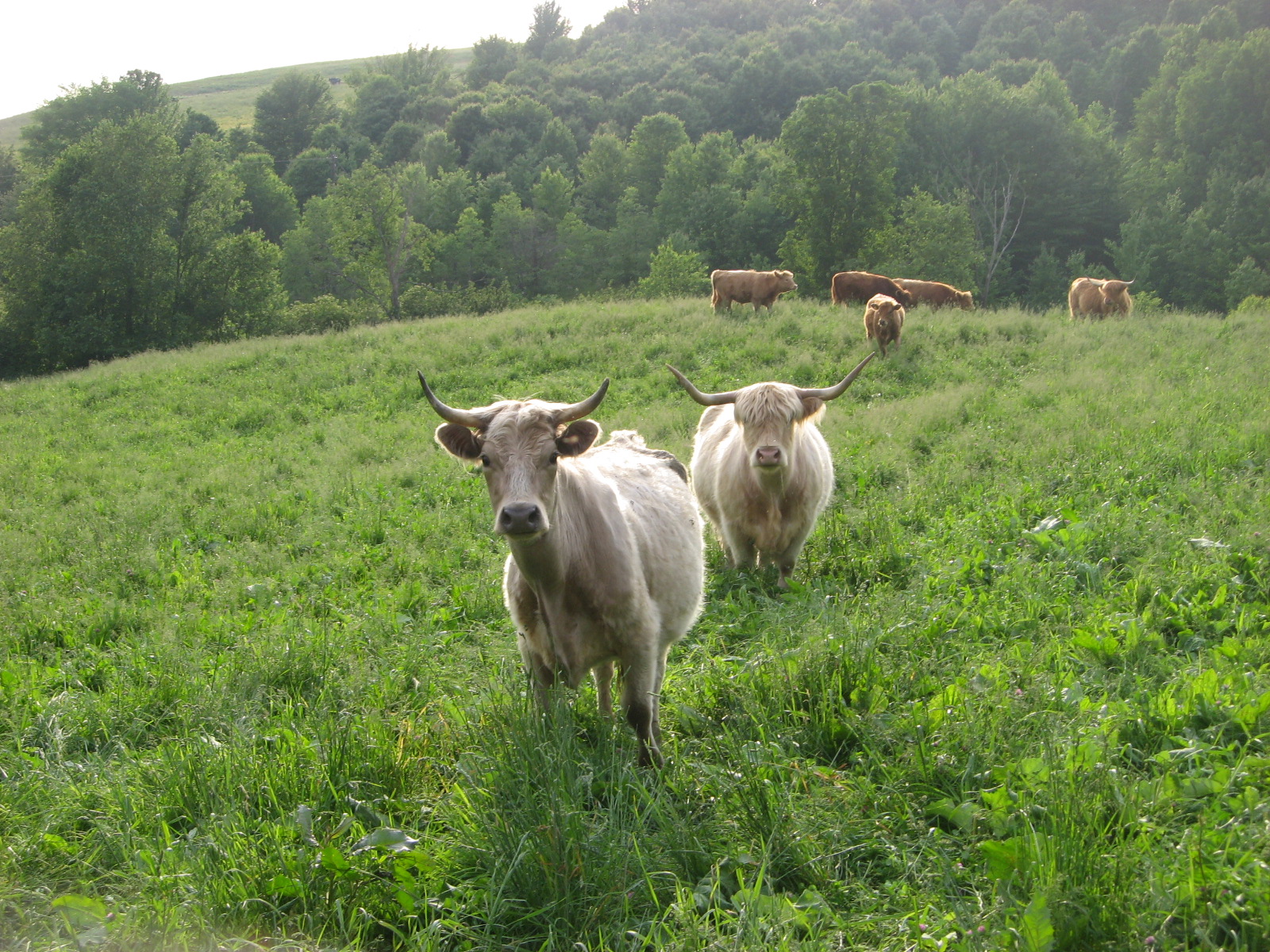
White Highlanders on Pasture

Raspberries in July

Catalina at Delaware County Fair. Moo!

Bluebird in our Garden


Riley home to visit Catalina


The Hen Party

Just Picked Tomatoes and Beans


Just Picked Wild Apples for the Press

Shane and Susannah Pressing Cider

The Cider Press

Morning Clouds over Mountain
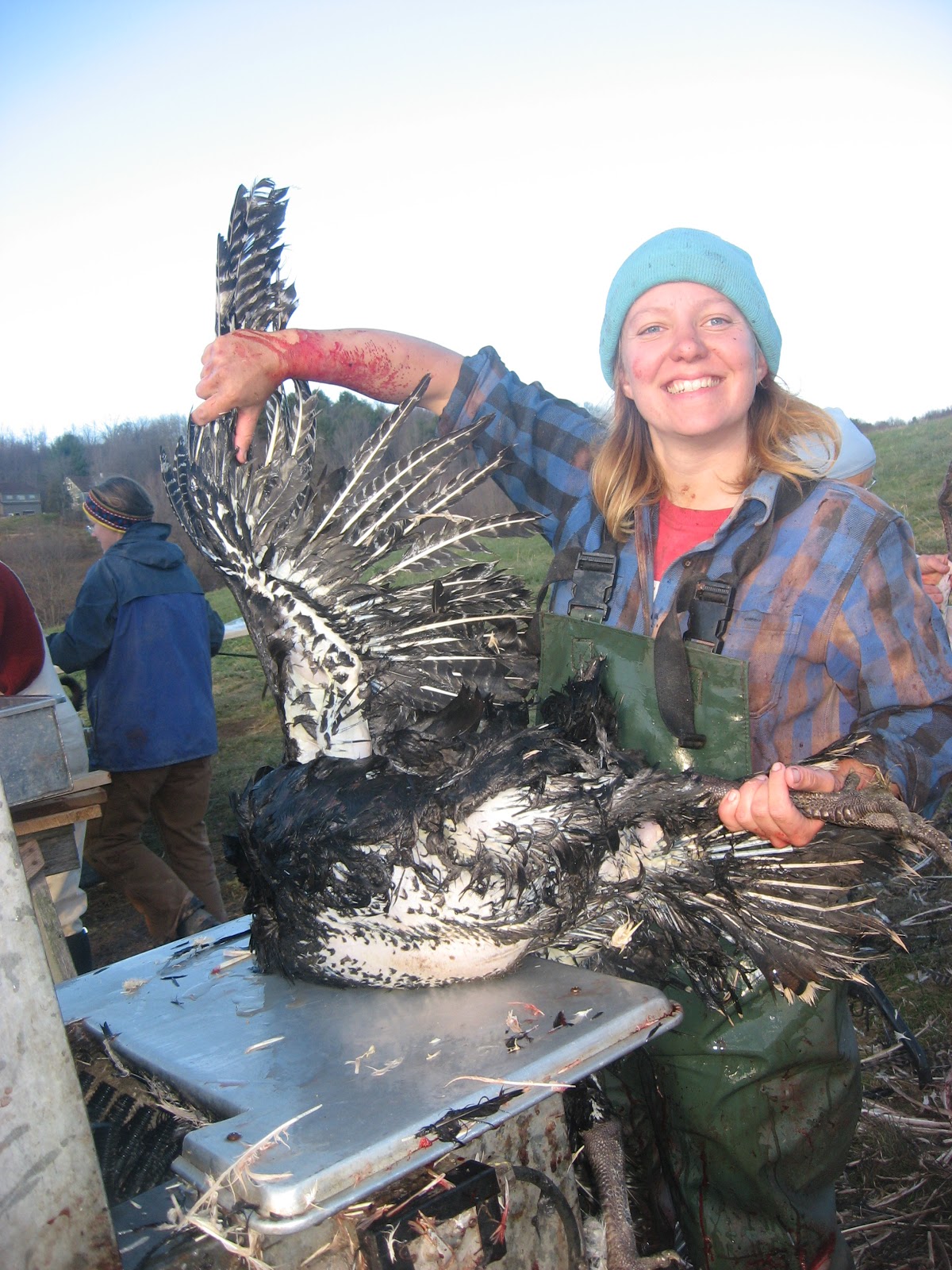
The Turkey Slaughter Crew Day 1

Turkey Guts


Susannah Plucking Bronze Turkey

Susannah and Kate cut Christmas Tree down

Hauling the Tree Home

Merry Christmas and Happy New Year
The challenges of 2011 in both our home and business lives shape our outlook for 2012.  2011 was an important year for turning our energy inward to nurture and heal our family, to break or cement commitments and relationships, to question our judgments and actions, to adjust and make hard changes and to prioritize our goals and actions to attain happiness and sustainable success.   A heartfelt thank you to our family, friends and customers who provided us with the emotional and financial ballast to survive the many steps backwards in 2011 and who nudged and cheered us forward with promises of love and commitment.  A quick look into our crystal ball reveals renewed hope, happiness and success in 2012.  We hope to share it with you.
.